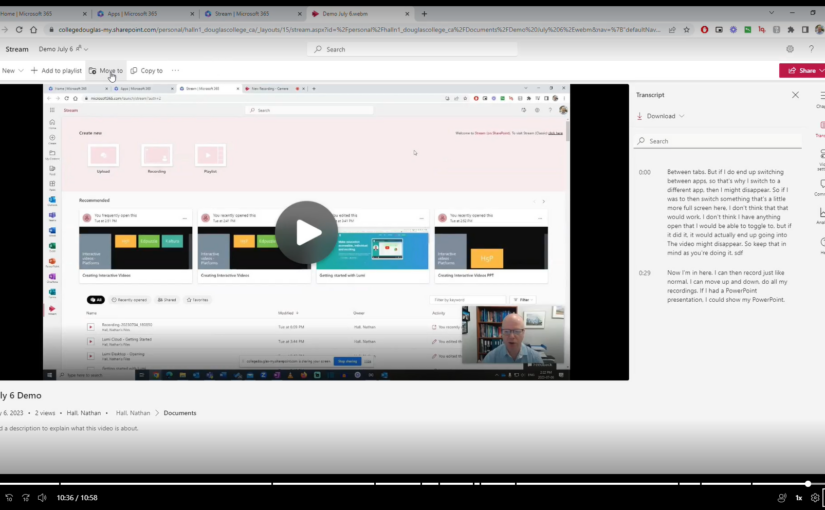
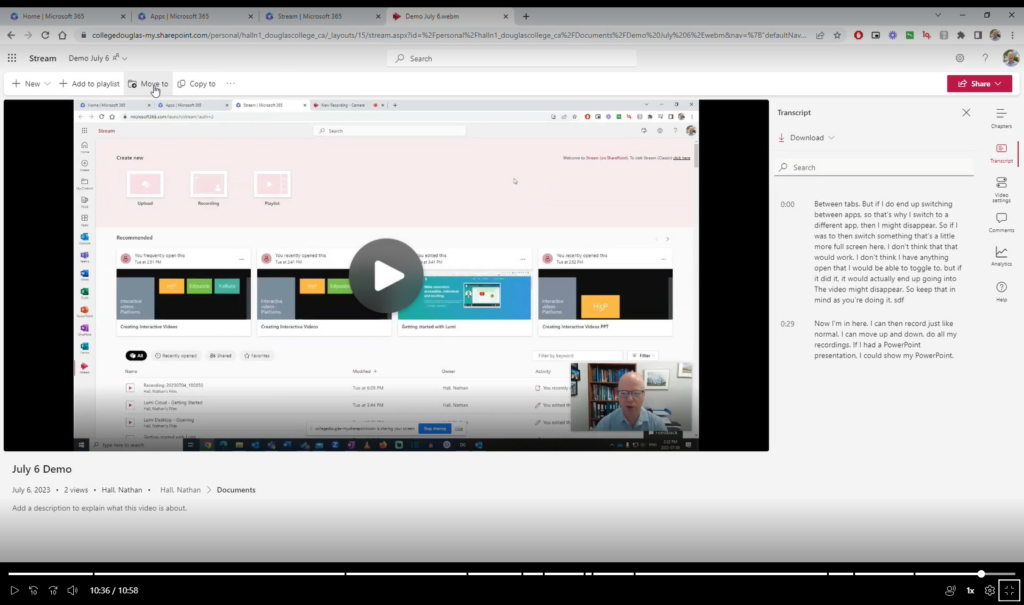
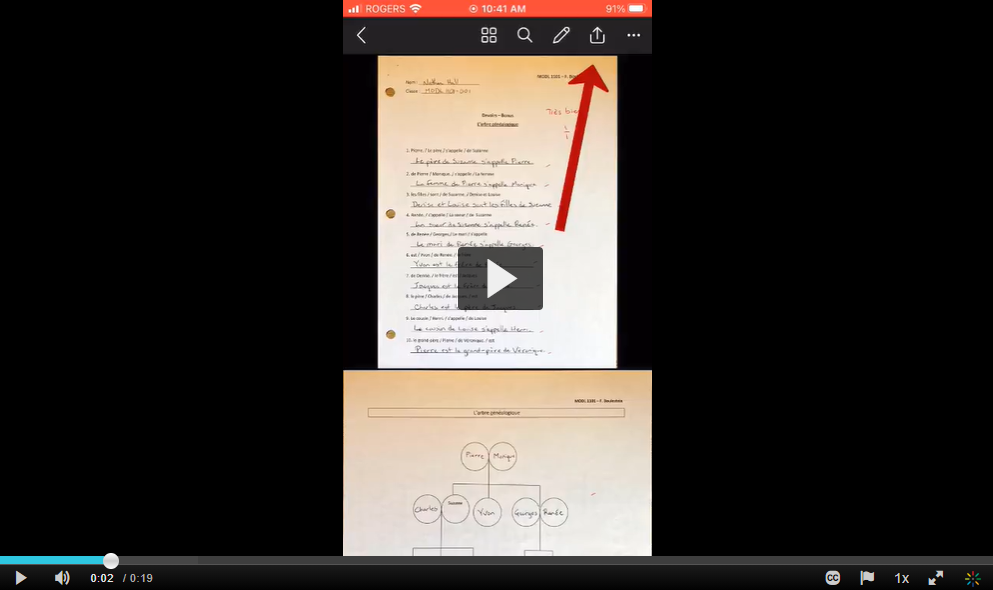
Microsoft has made some helpful updates to their video storage and streaming service Stream which has made it possible to create and share screen recordings with or without webcam videos. Here are some of the key features
No need to download any software. Simply record directly from a browser like Google Chrome.
Records your screen, audio, and your webcam.
Stores files in OneDrive. Videos are ready as soon as your are done recording.
Can have captions automatically generated with a transcript.
Can add chapters to make it easier to find sections of the video.
Can be embedded in a Blackboard page.
I find this tool really useful for giving video guidance to people who email with me questions that are easier to demonstrate than to give written instructions. I simply do a quick recording, grab the share link, and paste it in an email.
Here is a video on how to use it. You can also use the chapters to skip around.
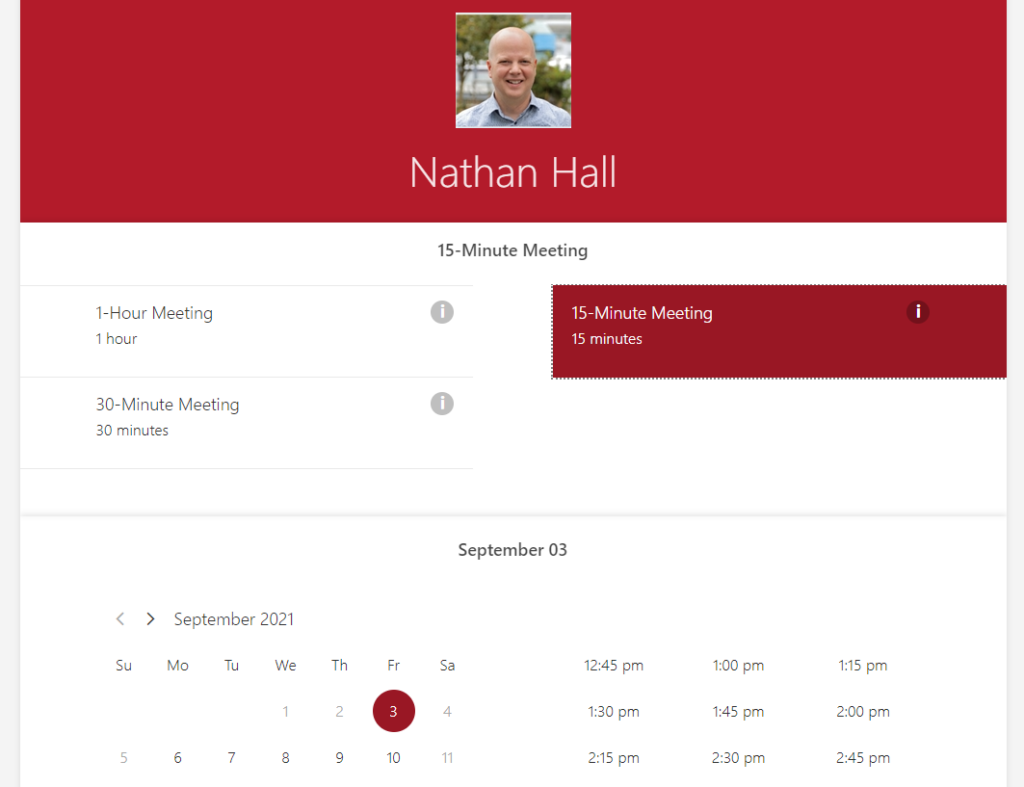
Microsoft recently made some changes to Outlook online to make it easier to create a personal booking page. This is a way for people to book time with you using your Outlook calendar. They do not see your calendar, but they will see the times you are available inside the windows of time you set up. It is a great way for you to create office hours or to have a way for colleagues to find time to meet with you.
One tool I make use of quite a bit in my in-person and synchronous classes is the cell phone. I realize some instructors would rather have students stay off their phones, but I talk with my students about being present in the class which means they leave the class (virtually) when they are on social media or chatting on their phones with friends. Instead, I have students participate in activities using online tools such as Microsoft Forms. This post isn’t meant to be a step-by-step instructional guide to using Forms. Instead, I want to share some ways in which I use forms in my classes and how you might make it work for you as well.
Ranking Question
This is one of my favourite uses for forms in my classes. I have used it my ELLA, Student Success, and TESL courses. Here are some examples of how I put it to use:
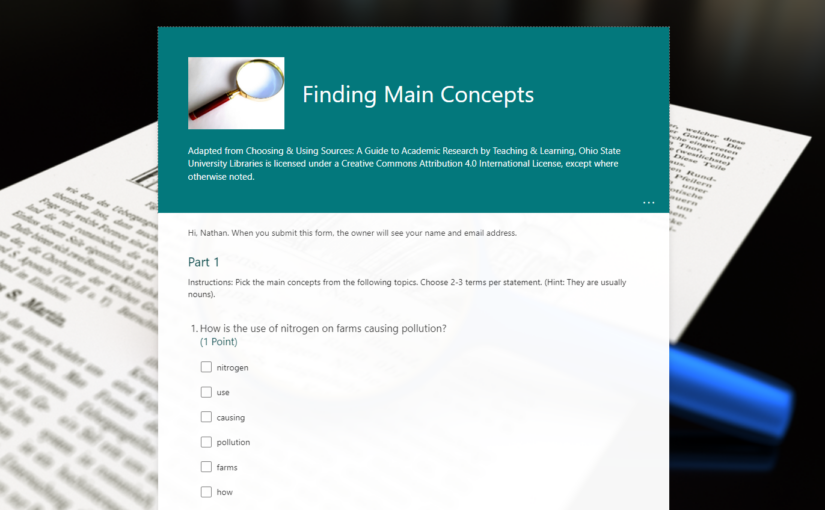
In my lowest-level ELLA writing course, we are working on paragraph structure. I took an eight-sentence paragraph that had a topic sentence, supporting sentences with transitional keywords, and a concluding statement and I mixed up the sentence order. Students in groups in class worked together on their phones, tablets, or computers to put the paragraph into a logical order. I only needed one response per group, so I had them designate a leader to post the responses on behalf of the team. Once each group has submitted their response, I then review it together as a class. Forms provides a graph showing the order of the sentences based on a calculated total of all responses. This shows the average response for the entire class. Later, I can review each group to see which group had difficulty with the exercise. Here is an example you can try for yourself along with the graph I would show to the class:
In my TESL course, I had them work through the order of a sample lesson plan that had been mixed up. In this situation, there were multiple ways of doing things, but there were three main blocks that needed to go in a certain order. The items within those blocks could be ordered differently. When we reviewed together, I wanted to show the three main blocks and how they were important. Again, we did this on phones, tablets, or computers in pairs or groups and only one response needed per group.
In my Student Success course, I had students put things in the order they found easiest to most difficult for them. The topics were based on problems students encounter during their first year in college. They discussed these as a group, but responded individually on their phones, tablets, or computers. We reviewed the average responses as a class.
Paperless Practice Activities
I use the text question option a lot in my forms. This allows students to share their ideas or answers in various ways. I’ve used it with APA reference writing practice, discussion style questions, and problem-solving questions. It is often done in pairs or groups with a review at the end with the whole class. It is one of the simplest ways of reducing paper use in my courses.
QR Codes
While you can share a form with students with a link they can click on, Microsoft Forms also creates a QR code for each form that you can share with students and they can scan with their phones or tablets. There are two ways I use QR codes in my classes.
I will often download the QR code for the form and paste it as a full-screen image in my slides. Students can then scan it on their phones or tables and start working on it in class. Having students working pairs or groups helps with situations where some students might not have a phone or tablet. Only one person per pair or group needs to scan the QR code and they submit the responses on behalf of the group. I use this in almost all of my classes. Students are so used to doing this since it was a common practice during the pandemic to access information.
I have also created a scavenger hunt using QR codes. I create a form for each task I want them to perform in the scavenger hunt and then I download and print the QR code. I paste those QR codes around the campus in areas where I think they should get to know such as Student Services, the fitness centre, and The Learning Centre. I try to hide the QR codes a little bit to make it a bit more challenging and to make sure other people don’t find them and remove them. When students scan the QR code, they get a question about the area and they need to submit their answer. They get a customized thank you message that gives them the next clue. They do this in pairs and when everyone is done, we review the answers as a class and I sometimes give prizes for the most correct answers. I don’t give prizes for the fastest completed since some students might have mobility issues and take longer to complete. I also want them to work through the answers instead of just getting it done. This activity takes some time to set up, but my students have mentioned how much fun it is and I know they at least know what some of the key areas of the college are and where they are located. It is really good for newer students to the college. I also provide students with link to the campus guide they can use to help them locate the places based on the clues.
Student-Created Forms
Since each student has access to Office 365, they also have access to Microsoft Forms. That means they can create forms as part of their work for the class. They can also invite others to work on the form with them by getting the Share to Collaborate link and sharing that with their partner(s). In one of my classes, students were assigned a study skill to research such as exam preparation, notetaking, and time management. As part of the assignment, they needed to do their own research study by creating a form they would use to gather data from students across Douglas College. They would then take that data and create an infographic they would share with their classmates and even the college (we put them up in the hallway). They needed to create both open and closed questions which could then be used in different ways in the report and the infographic.
Rating Question
You can add a rating question to your form to check in with students on how things are going. This is helpful as an exit ticket before them leave for the day to see how confident they are about what they learned that day. It can also be used as a way of midterm check-in to find out what has been working and what hasn’t in the course so far.
Most of the tools within the Douglas College Office 365 accounts store their data and files within the user’s OneDrive account. This makes it easy for the user to copy files from one area to another. One tool that does not store their files in OneDrive is Microsoft Forms [Note: some data may be stored in OneDrive, but the main form or quiz is not]. Whenever a user creates a form or quiz in Microsoft Forms, the form is only stored online. This means the user needs to find another way to copy the file if they want to use it with another account. This could be when someone leaves Douglas College and wants to keep a copy of their forms and quizzes created using their Douglas College Office 365 account. The user can create a free Microsoft account and then copy any forms or quizzes they want to keep into that free account. It is not a difficult task, but it does require the user to do it one form or quiz at at time.
This is also useful when one user wants to share a template of the form or quiz with another user. This might be an instructor who has created a form or quiz that another instructor teaching the same course could use in their own class. It might even be the same user wanting to create a copy for a different section of the course.
Here is how you can copy a form or quiz to another acccount.
Open the form or quiz you want to copy.
In the top-right corner, click on the three dots.
Click on Collaborate or Duplicate.
Under Share as a template, click on + Get a link to duplicate.
Paste the link into the address bar, and hit return/enter on your keyboard.
Click on Duplicate at the top of the screen.
You will be asked to log into an account. Log into the account in which you want to copy the form or quiz.
Once you are logged in, it will create a copy and you will now see the new copy on your screen.
If you have more than one form to copy, don’t close the private/incognito tab. Simply go back to the other window where your original form is located and start the process again with the next form. You can simply toggle back and forth between your two accounts in separate windows this way.
Here is a video demonstrating these steps using Google Chrome (no audio – only text guides)
One of my favourite tools in Microsoft Office 365 is Forms. I use it in my courses, my committee work, and anywhere else I need to collect information from people. It is a straightforward tool to use and has only gotten better over the years.
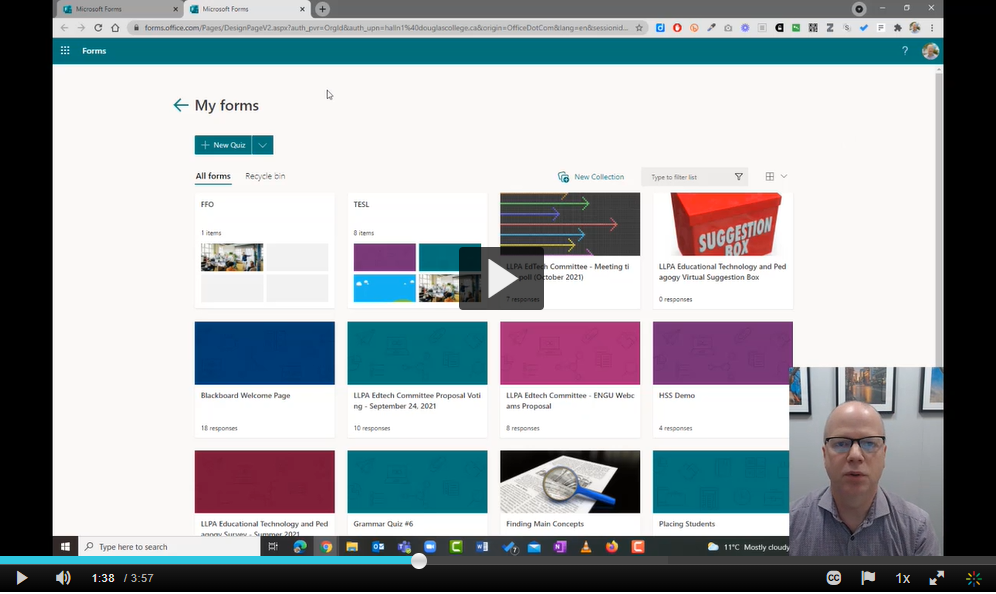
One of the main complaints I have had with Forms is the lack of ability to organize forms into folders. Thankfully, Microsoft has listened to us and has added Collections to Microsoft Forms.
Click on the image above to learn more in this 4-minute video.
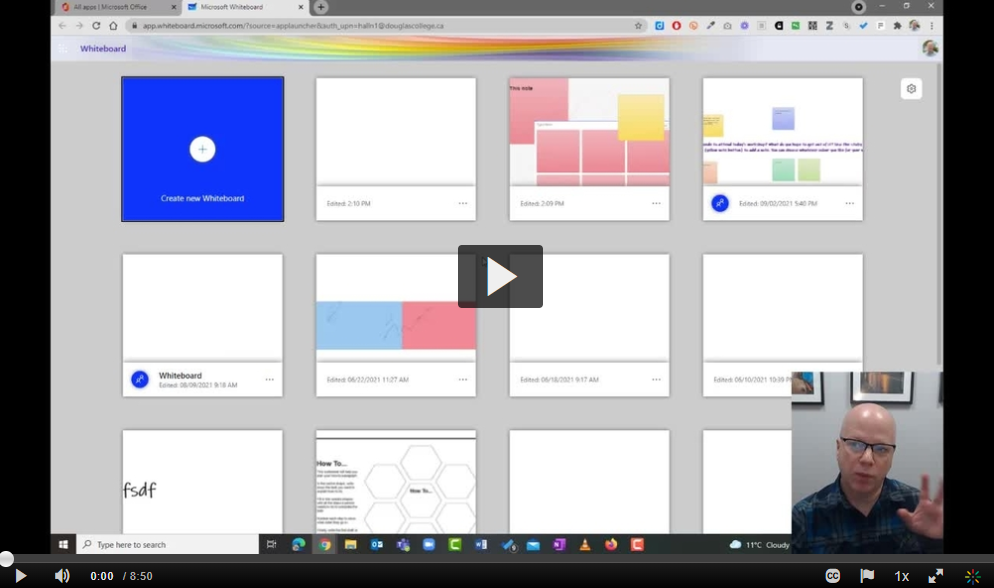
I have previously talked about using Microsoft Whiteboard with your students, but now Microsoft has added a number of features that really make it an effective collaboration and brainstorming tool. Click on the video to learn how you can use this with your students.
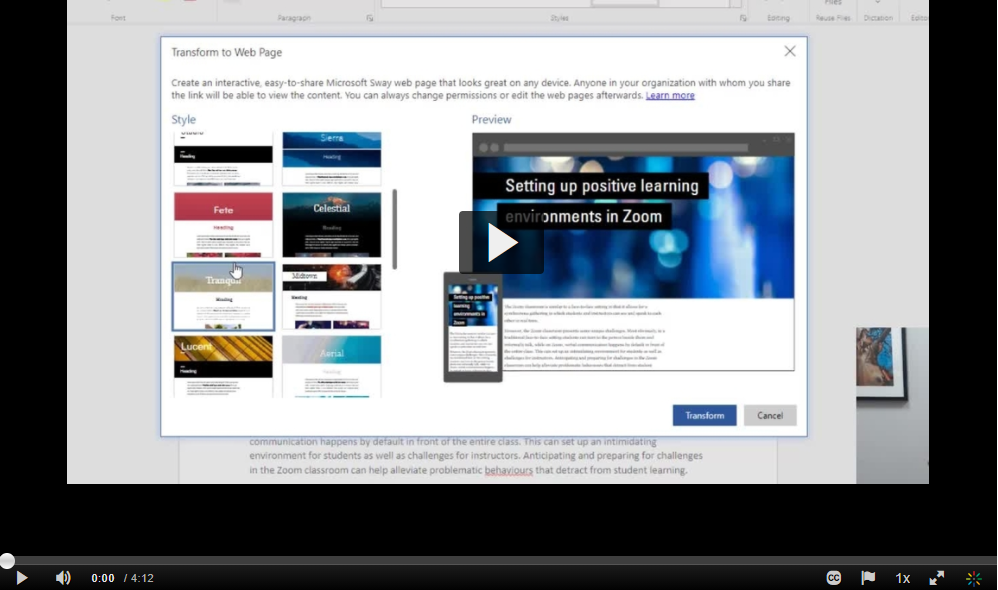
It is really simple to take a Word document and turn it into a webpage that is accessible by desktop and laptop computers as well as mobile devices. It doesn’t take any programming skills either.
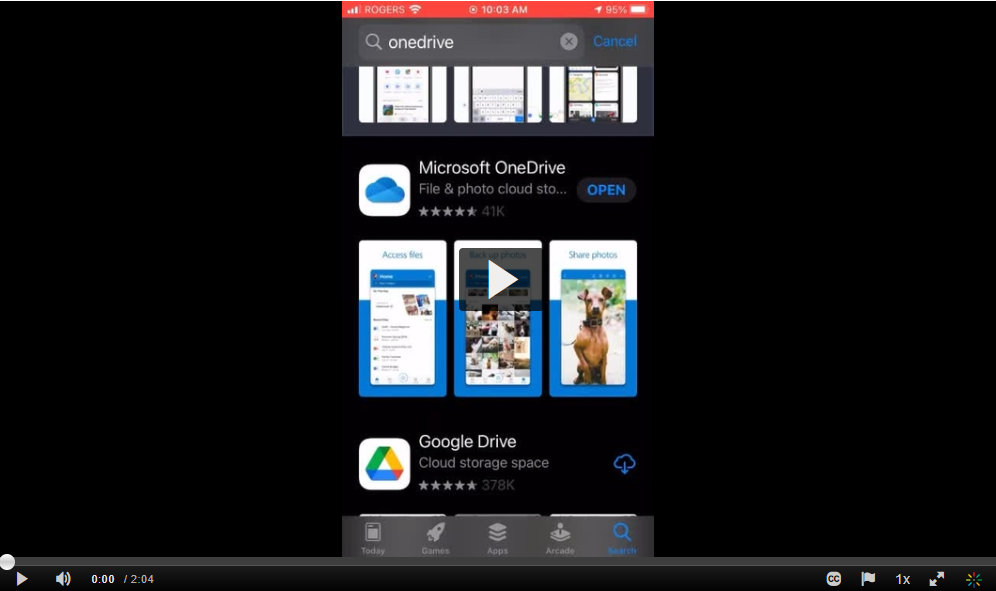
If you want your students to scan their work to share with you electronically, you can simply have them use the free Microsoft OneDrive app on their phone or tablet.
Here is a video you can share with your students on how to install the OneDrive app and then scan a document and save it to OneDrive.
Here is a video on how students can share a file with you using the OneDrive app.
Feel free to share these videos with your students.
Learn how to use the Microsoft Translator app on your phone to create live captions in OneNote that will automatically be saved as a transcript in the notebook. This is a great accessibility tool for students.
As we move back on campus, you might still want to use an online booking page for your office hours. This is a simple way for students to book a time with you in person or for meeting online. Some of you are already using a service to do this, but some of you may not be aware that Douglas College has access to Microsoft Bookings as well. This comes as part of your Office 365 package and is free for you and your students to use. It allows you to set the meeting increments (e.g. 15-minute meeting blocks) along with dates and times. I have been using this for a while now and it works well. Here is how to do that:
Log into your Office 365 account on your computer.
Click on the All Apps button in the bottom-left corner.
Finally, you will need to create the page your students will use to book the meeting. Click on Booking Page to customize your page. Here is a 1:31 video on how to do that.