This week Steven and I met up for a virtual hallway chat with a Douglas College student taking courses for the first time online this summer. Among other things, Charlene is a mom to twins and has her sights set on a career as a dental hygienist.

This week Steven and I met up for a virtual hallway chat with a Douglas College student taking courses for the first time online this summer. Among other things, Charlene is a mom to twins and has her sights set on a career as a dental hygienist.
This week Steven and I met up for a virtual hallway chat with Eamonn O’Laocha a Douglas College Faculty Member in the Department of Business Management. Among other things, Eamonn is working with the Douglas College Facilitating Faculty Online Group and kindly shared some of his observations about the challenging path facing faculty. In addition, Eamonn spoke to some of the work he is doing to address tech inequity and access to education.
To learn more about his work check the full article https://www.douglascollege.ca/about-douglas/news-and-media/news/2020/May/digital-devices-donations. Eamonn’s interview is full of excellent insights and reminds us all of the importance of understanding the ‘novel’ times we are in.
We would like to acknowledge that we live, learn, work, and play on the unceded traditional territories of the Coast Salish Peoples of the QayQayt and Kwikwetlem First Nations.

Eamonn referred to the work of Paulo Friere in the recording; here is a link to more information about Friere: https://infed.org/mobi/paulo-freire-dialogue-praxis-and-education/
Like many in quarantine, I decided to try making sourdough bread. I pulled the neglected jar of starter out of the fridge and read the instructions from the friend who had given it to me months earlier. I realized the starter did not look too good, texted my friend for further directions, and accepted the response that I had been a “bad bad boy”.
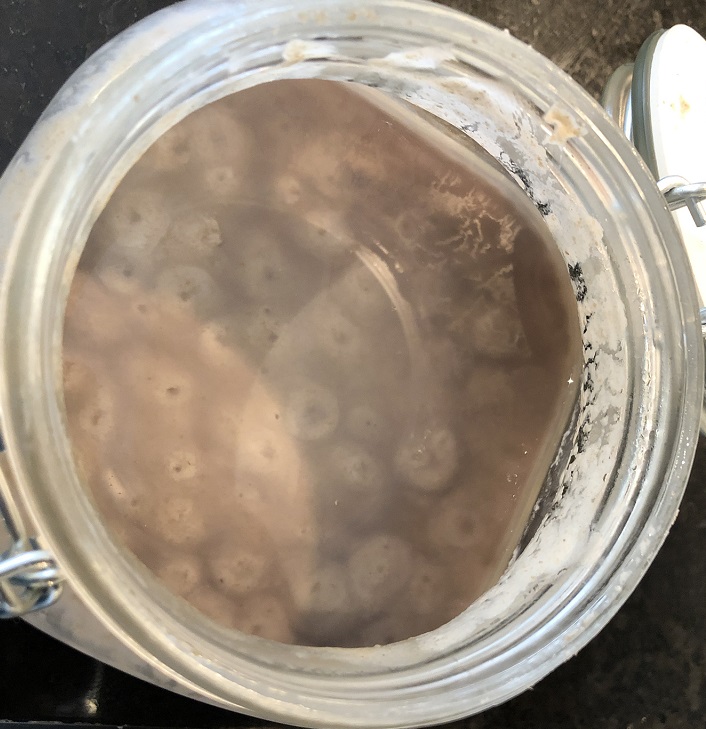
After resuscitating the starter, and following the recipe, I succeeded in baking a passable bread. My subsequent attempts were disappointing. One time I had to bake the dough because it was so sticky, I otherwise could not figure out how to dispose of it.
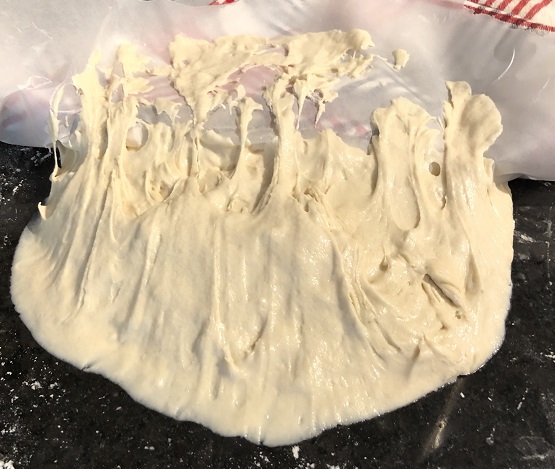
I do not like failure; so, I kept trying. Other people’s recipes and suggestions, internet searches, the Tartine Bread book, live chat with an experienced baker. I was still making less than hoped for loaves….
One over-tasking, multi-pressured morning, I lost it. I blamed the crummy scale that kept turning off midway through refreshing the starter. I blamed the recipes, the flour, the water, the process itself, the absurdity of life. I felt discouraged and angry at the whole endeavor. As my fit subsided, I did a bit of self-reflection (and apologizing). That is when the thought came to me, maybe many of the instructors I had been trying to support over the last many weeks in the sudden transition to remote teaching were experiencing analogous frustrations with Blackboard, online anything/everything, and technology in general. Maybe my frustration had some parallel to what instructors feel when they are trying to learn unfamiliar tools and strategies—following the various “recipes” provided.
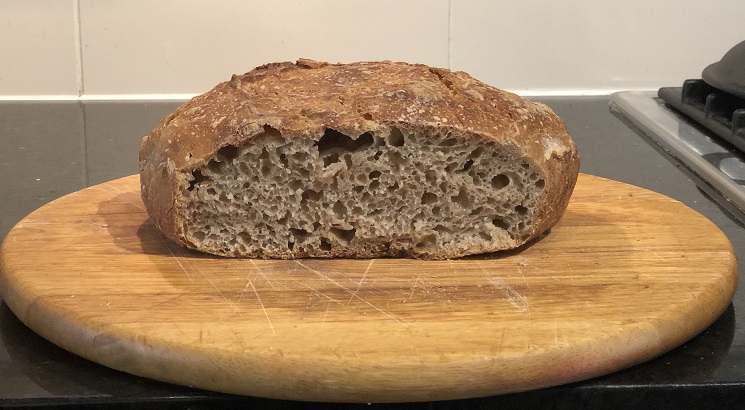
The little leaven of fellow-feeling activated something in me. Learning a new skill is hard work. Learning under pressure, in new environments, and in isolation is even harder. The loaves are getting more consistent, the process more familiar, the bread delicious and well-raised.
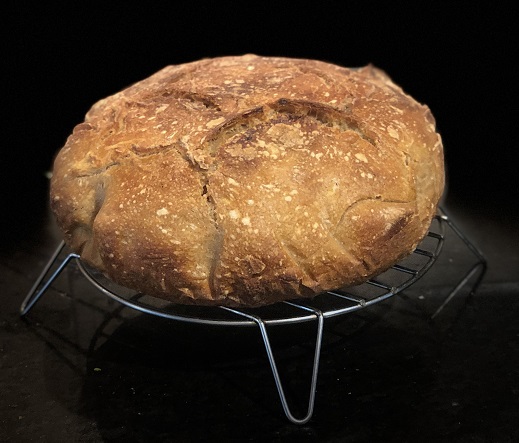
Baking bread is nothing like remotely instructing dozens of young people, and ensuring they have the best possible educational experience. Producing an instructional environment is necessary. Not the only, but a very important, aspect of instruction. Each iteration shows development and improvement. Maybe analogous to bulk fermentation. Rest and “folding in” are critical elements as well… the analogies keep coming – (“faculty mentors are like sourdough starter” “too much incorporated fermentation is like an over-bloated course”) – I think you get the idea.
I am a beginner, learning to value processes. My own, and those I am attempting to support, and feel humbled and encouraged to keep going. I have a growing appreciation for the opportunity to work with so many fine educators.
We would like to acknowledge that we live, learn, work, and play on the unceded traditional territories of the Coast Salish Peoples of the QayQayt and Kwikwetlem First Nations.

There are people in post-secondary education who seek each other out for support and encouragement in developing exemplary practice. We (the learning designers) are fortunate in meeting with and sometimes introducing these dedicated instructors and staff to each other. Shannon Cox is one such educator who proposed recording an activity she uses in her Marketing course. Ritual Dissent, a classroom activity that involves students discussing a fellow-student’s work while the she is sitting nearby, with her back to the conversation, might seem like an unusual way to demonstrate whole-person learning (Shannon’s idea to record the activity came up in a Whole-Person Learning Community of Practice meeting).
The value lies in the listening that is required. The breakout group listens to the presentation intently, and then the student-presenter “listens in” on their respectful (guidelines are provided by the instructor) dissent or disagreement with the presenters assumptions, or suggestions of alternate approaches.