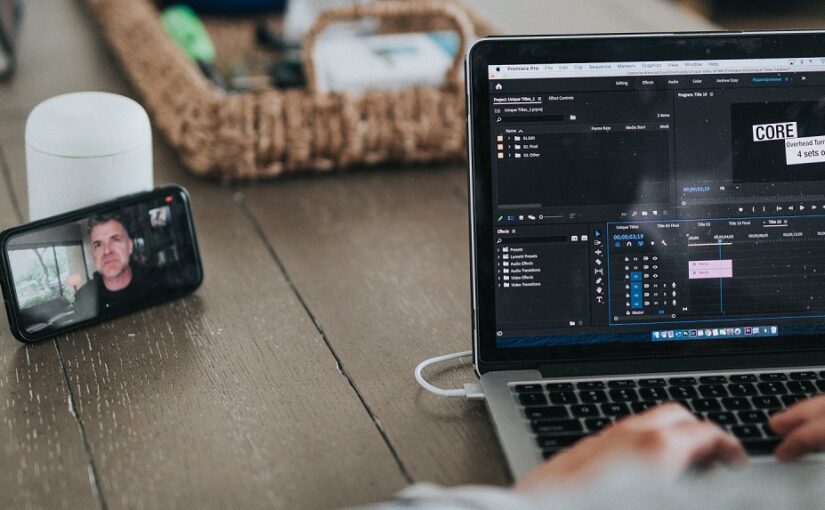
This week Steven and I met up for a virtual hallway chat with a Douglas College student taking courses for the first time online this summer. Among other things, Charlene is a mom to twins and has her sights set on a career as a dental hygienist.

This week Steven and I met up for a virtual hallway chat with a Douglas College student taking courses for the first time online this summer. Among other things, Charlene is a mom to twins and has her sights set on a career as a dental hygienist.
This week Steven and I met up for a virtual hallway chat with Eamonn O’Laocha a Douglas College Faculty Member in the Department of Business Management. Among other things, Eamonn is working with the Douglas College Facilitating Faculty Online Group and kindly shared some of his observations about the challenging path facing faculty. In addition, Eamonn spoke to some of the work he is doing to address tech inequity and access to education.
To learn more about his work check the full article https://www.douglascollege.ca/about-douglas/news-and-media/news/2020/May/digital-devices-donations. Eamonn’s interview is full of excellent insights and reminds us all of the importance of understanding the ‘novel’ times we are in.
We would like to acknowledge that we live, learn, work, and play on the unceded traditional territories of the Coast Salish Peoples of the QayQayt and Kwikwetlem First Nations.
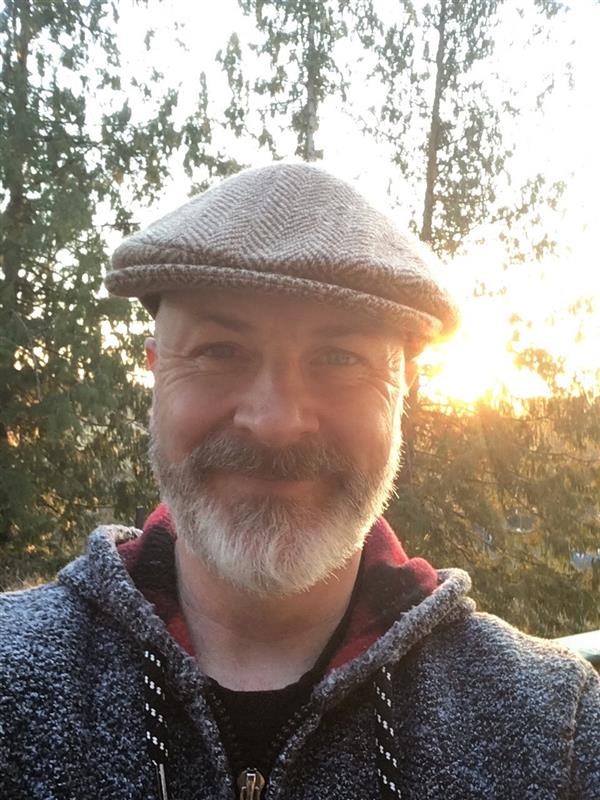
Eamonn referred to the work of Paulo Friere in the recording; here is a link to more information about Friere: https://infed.org/mobi/paulo-freire-dialogue-praxis-and-education/
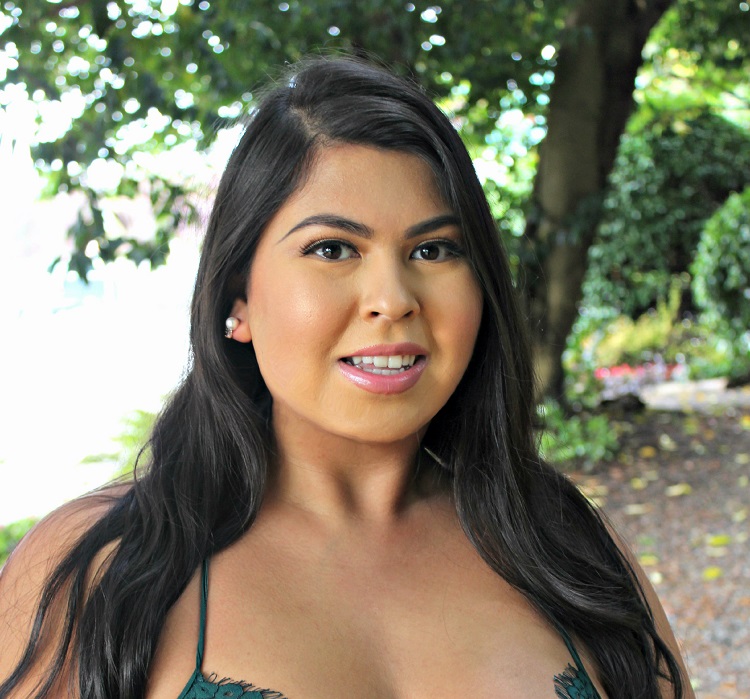
This week Steven and I met up for a virtual hallway chat with Seren Friskie. Seren is an Indigenous Psychology student, mental health advocate, community organizer, and activist living on the unceded traditional territories of the Coast Salish People’s. She kindly and generously shared with us what’s it like to be an online student, as well as some of the important work she is doing to research and support better mental health outcomes for vulnerable and marginalized communities. We highly recommend you check out her interview to see things from a student point of view.
To learn more about some of the work that keeps her busy, check out the links below:
SARAVYC: https://www.saravyc.ubc.ca/person/seren-friskie/
Foundry: https://foundrybc.ca
Connect with her on Instagram @renfriskie
Please share your thoughts, comments, and suggestions with us as the podcast continues to grow.
We are Lisa Smith (lsmith65@douglascollege.ca) and Steven Bishop (bishops@douglascollege.ca).
We would like to acknowledge that we live, learn, work, and play on the unceded traditional territories of the Coast Salish Peoples of the QayQayt and Kwikwetlem First Nations.
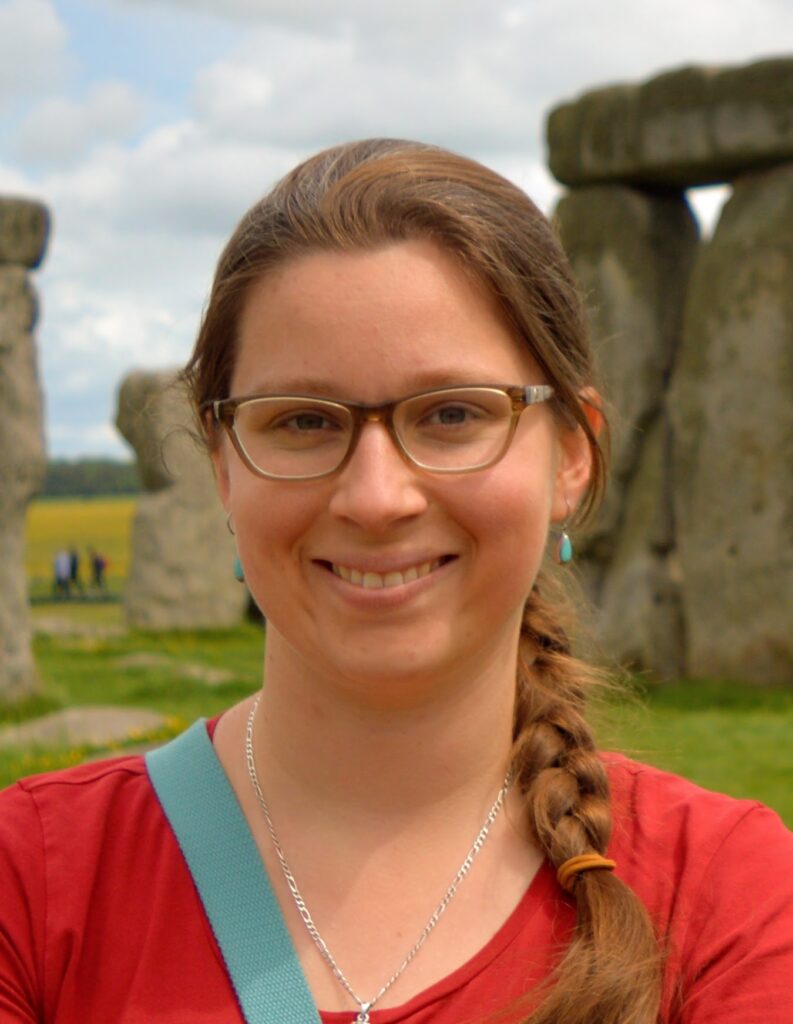
This week Steven and I met up for a virtual hallway chat with Dr. Sarah Hogarth Rossiter. Sarah shared with us what’s it like to be a contract instructor (on short notice) at Douglas College for Summer 2020. In addition, we chatted about some of her thoughts around the importance of critical thinking under COVID-19 times.
Check out her recent Burnabynow.com article, “We shouldn’t be second-guessing Dr. Henry during this crisis”
Listen to the Kelly Hunt song, “How Long” that Sarah mentioned for some food for thought while we’re apart. Check it out! https://youtu.be/ElwRHoDOjpE
Please share your thoughts, comments, and suggestions with us as the podcast continues to grow.
We would like to acknowledge that we live, learn, work, and play on the unceded traditional territories of the Coast Salish Peoples of the QayQayt and Kwikwetlem First Nations.
with hosts Lisa Smith (Sociology) & Steven Bishop (Learning Design)
With the spread of COVID-19 across the globe, the Summer of 2020 is profoundly different for Douglas College faculty, staff, and students. Winter 2020 ended abruptly with a move to on-line teaching for the remainder of the term. For folks teaching summer courses at Douglas College, for the first time ever, all course instruction will be on-line. Dare we say that the phrases, ‘I’m scrambling…’, ‘I’m freaking out…’, and ‘when will this be over’, have certainly become common enough! We are just beginning to realize the vast and far-reaching impacts of this virus on individuals and communities across the globe. Many members of our community are grappling, both directly and indirectly, with the fallout of this massive social upheaval.
For instructors there is an imminent and ongoing need for technological support; however, the nuts and bolts of navigating on-line teaching are not the central focus of this podcast. This podcast is about hearing from DC faculty, staff, and students, as they navigate through the on-line realm in these novel times.
We had many questions at the outset of this podcast:
What was it like to move everything on-line within a week?
What things did you try, but found didn’t work?
How do you build a sense of connection and community when teaching in on-line spaces?
How do you cultivate presence as an instructor when teaching on-line?
How do you manage the complex patterns of inequality that continue to shape how students gain access to education?
Are we aware of all the ways our students are impacted by COVID-19 (emotional, physical, and beyond)?
What kinds of things do you consider when making choices about content delivery?
What is it like to instruct from home? To learn from home? To work from home?
What expertise can you share with us to help us understand the social changes that are unfolding?
What are your hopes, fears, worries for this time?
Even though the questions are complex, the format is simple. Guests are invited for virtual hallway chats. We record the conversation and share with others. We chose the hallway chat model to replicate one of the benefits of the close quarters we inhabit as HSS Faculty. We have the privilege of ‘running into’ each other throughout the term. We find these conversations rich opportunities for learning about the work of our colleagues, trouble-shooting small issues, or even delving into deeper reflection. For each chat session we will post any additional reading materials that are mentioned in the recording.
We invite you to listen, share, and create with us as we explore the depths of our new digital humanity.
The first podcast is an interview with Joseph (Joey) Moore, Professor of Anthropology and Sociology at Douglas College. He has research interests in environmental sociology, urban sociology, and social movements.
Hallway Chat 1: Joseph Moore (Sociology)
Steven and I were pleased to welcome Dr. Joseph Moore, Sociology, for our first virtual hallway chat.
In this chat, Joey mentions Arlie Hothschild’s book, The Time Bind: When Work Becomes Home and Home Becomes Work, first published in 1997.
Check out his co-edited collection, Sociology of Home: Belonging, Community, and Place in the Canadian Context
https://www.canadianscholars.ca/books/sociology-of-home
Joey sent us this link to an University Affairs article with ideas on “humanizing an essentially dehumanizing medium.”
We would like to acknowledge that we live, learn, work, and play on the unceded traditional territories of the Coast Salish Peoples of the QayQayt and Kwikwetlem First Nations.

“What would you do if you suddenly had to deliver your face-to-face class online, and with minimal preparation time?”
This was the question Michelle Jickling, Instructional Designer and E-Learning Developer for Douglas College’s Training Group, and Steven Bishop, Douglas College Learning Designer, discussed in the first of a series of episodes exploring digital literacies.
We used Blackboard Collaborate online meeting software to model the solutions we were proposing, since we were both at different locations. Here are the topics, images, and links discussed during the session:
Top Five Essentials for going from face-to-face course delivery to online delivery:
Additional Considerations:
SAMR = Substitution, Augmentation, Modification, and Redefinition
How Technology Can Improve Learner-Centred Teaching
Douglas College Blackboard Faculty Resources
DEN (Douglas Educators Network) Blackboard Organization
Blackboard Collaborate online meeting software—Help for Moderators
We would like to acknowledge that we live, learn, work, and play on the unceded traditional territories of the Coast Salish Peoples of the QayQayt and Kwikwetlem First Nations.

by Steven Bishop
Michelle Jickling, who is currently working as an Instructional Designer and eLearning Developer with the Training Group at Douglas College, and I sat down for a conversation about the essentials of helping subject-matter experts and instructors with course development. We specifically addressed some of the initial concerns with translating the expert’s knowledge to an online environment, such as the Blackboard LMS currently used by the College.
Our discussion touched on:
We would like to acknowledge that we live, learn, work, and play on the unceded traditional territories of the Coast Salish Peoples of the QayQayt and Kwikwetlem First Nations.
A conversation with Angela Heino, Learning Strategy and Quality Coordinator in Health Sciences, and Bachelor of Science in Nursing (BSN) faculty at Douglas College.

Angela is one of two instructors in the BSN program currently teaching N2215: Leadership and Interprofessional Collaboration (IPC) course. This class encourages reflection on various aspects of leadership and IPC while providing students with the opportunity to engage in the lived experience of interprofessional education (IPE) as well. In this course, students explore the roles and responsibilities of team members to both patients/families as well as to the other members of the health care team. This process draws on various viewpoints and acknowledges the diverse knowledge and skill-sharing required of a successfully integrated team. Students learn strategies for facilitating interdependent collaboration, explore ways of understanding conflict constructively, and how they as individuals can help to create a healthy workplace.
The SWITCH event brings students together from different programs (BSN, Psychiatric Nursing, and Disability and Community Studies) to work on an ethics-based case study. Then the students converse on three different health related topics selected because of their timely, and complex, nature such as: vaccination, the legalization of cannabis, and medical assistance in dying. The students do a “speed switch” and within this relatively brief time frame, each student briefly shares their own views on the topics. The goal is that students learn to appreciate distinct and diverse world views, build awareness of their own assumptions and biases towards these topics, as well as exchange ideas in a respectful and professional manner. This unique event allows every voice at the table to be heard, and boosts the collective intelligence of a team.
The well-attended morning event looks and feels like a conference, and includes a hot breakfast. After this term’s event, the students were able to provide feedback through an online survey on how SWITCH benefited their learning and how they plan to take what their learned forward into their practice.
Faculty also involved in the planning and organization of this Winter’s event included: Jennifer Kane (BSN), Tracey McVey (PNUR) and Aaron Johannes (DACS).
We would like to acknowledge that we live, learn, work, and play on the unceded traditional territories of the Coast Salish Peoples of the QayQayt and Kwikwetlem First Nations.
Lisa Smith and Steven Bishop facilitated a workshop at Douglas College that opened up discussions about listening and encouraging student voice, examined Lisa’s process of developing a podcasting assignment in her Gender and Youth Cultures class, and provided some basic audio recording information. The workshop included:
Link to the PODcast! Presentation
Link to Podcast Workshop Resources (Google Document)
We would like to acknowledge that we live, learn, work, and play on the unceded traditional territories of the Coast Salish Peoples of the QayQayt and Kwikwetlem First Nations.
ATS is currently running a new series of workshops in time for the summer term called “Express Yourself!” These workshops will provide you with an overview to the specific teaching method by faculty experts, plenty of Q&A, and some hands-on play time. Our goal is that you start seeding the possibilities for your own teaching, contemplating how these ideas will engage and motivate your students.
Here’s what’s on offer:
And, these workshops are open and free to everyone. Here’s how you register.