Becoming an Algorithmic Problem: Slowing Down as a Political Act with INST 1100 students

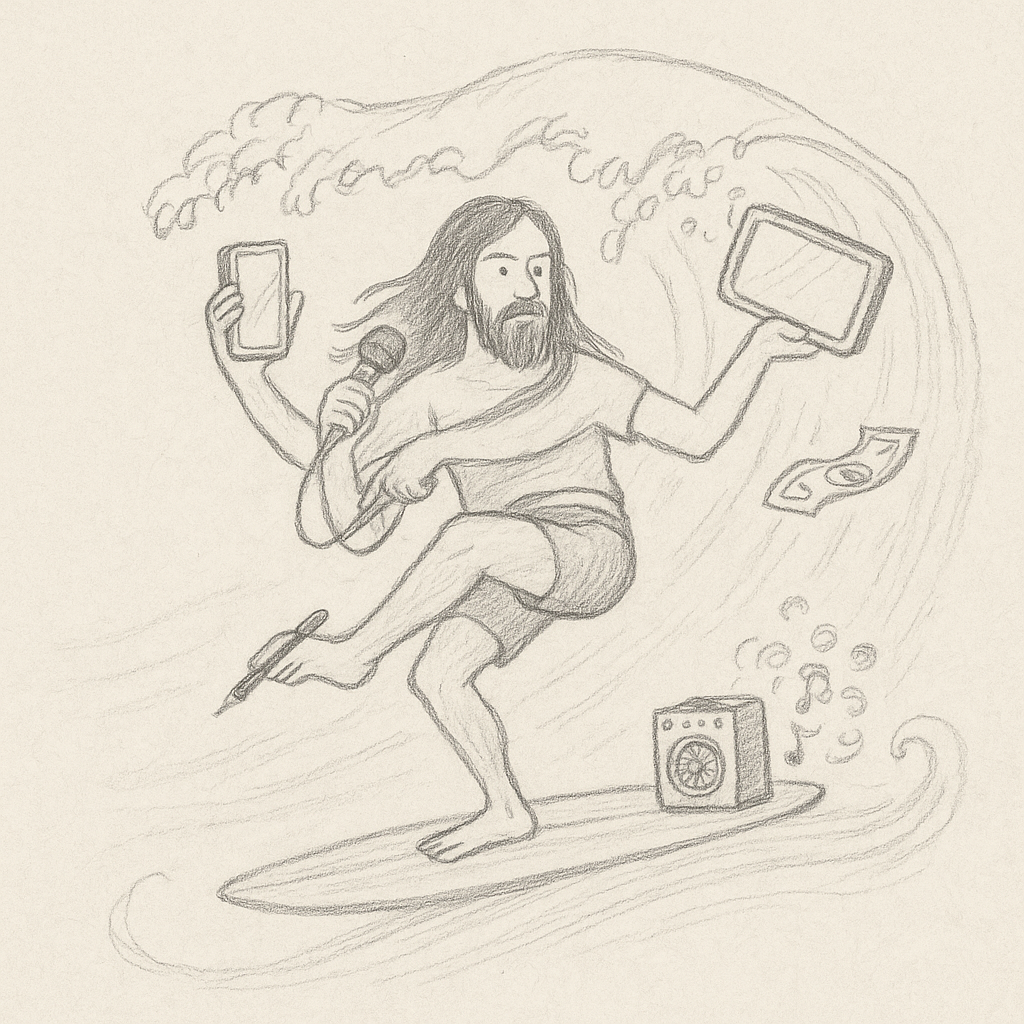
image based on a pencil drawing made by Steven Bishop, inspired by an image from the 1971 book “Be Here Now” by Ram Dass (Richard Alpert)

In a recent class dialogue with Dr. Jovian Radheshwar’s INST 1100 students, we explored ideas from political scientist Dr. JosĂ© Marichal, author of You Must Become an Algorithmic Problem: Renegotiating the Sociotechnical Contract. His work examines how our lives have become entwined with algorithms — systems that categorize, predict, and shape our digital experiences.

Here’s a simple way to think about the difference between social media and algorithms, which came up in the class discussion:, drawing on Jose Marichal’s explanation:

  • Social media is the visible layer — the apps and platforms where we post, share, and connect. It’s where we perform our identities and find community.
  • Algorithms are the invisible layer — the systems behind those platforms that decide what we see, when we see it, and who sees us. They quietly shape our feeds, recommendations, and even our sense of what’s “normal.”

Social media is the stage. Algorithms are the directors. Marichal’s key point is that we often blame the stage, but forget about the directors quietly shaping the show.

Dr. Marichal draws a parallel between the social contract — the implicit agreement we make with society to exchange certain freedoms for collective security — and what he calls the sociotechnical contract. In this new digital era, we have unwittingly traded our attention, privacy, and even aspects of independent thought for the conveniences of social media, algorithmic news feeds, and digital companionship.

The Attention Economy and the Outlier

Students were quick to recognize how easily social media can shape perception. One noted how their feed filled with political praise for one U.S. leader without presenting opposing views. Another shared how TikTok’s algorithms “trained” themselves to reflect heartbreak or attraction—depending on what held their attention longest.

Dr. Marichal’s warning is that algorithms thrive on generalization. They group us into categories that make us easier to sell to, sway politically, or polarize socially. The “outliers” — those who don’t fit the model — are vital to creativity, democracy, and human progress. As one student insightfully said, “You have to train your social media algorithm to what you actually want.”

Slowing Down as Resistance

We considered whether slowing down could itself be a political act. What if, in a world obsessed with speed, scrolling, and optimization, we simply paused?

One student responded:

If we just stopped using Facebook or Instagram, we could make the founders go bankrupt. Our attention is what they want — and we have the power to take it back.

Another reflected:

I think slowing down makes sense as a political act because if you can slow down, you can kind of rebel against capitalism. Like our time and our energy and our bodies are the currency that capitalism operates off of.

We discussed “attention” as the new frontier of civic power — something both tech companies and social movements compete for. Even mindfulness, once a personal wellness practice, becomes a political gesture when it interrupts the algorithm’s grip.

Mindfulness, Attention, and the Self

We discussed how Mindfulness, can help shift us from a “survivalist mind”—constantly reacting to fear, news, and comparison—to an “attentionist mind”, capable of calm observation.

We even tried a simple exercise: lightly touching our fingertips together and noticing the subtle ridges of sensation. For a moment, attention was no longer a commodity — it was presence.

Another student mentioned that yoga, practiced at home by his parents, can reclaim this awareness:

to be at ease with yourself, at ease with your mind, at ease with, no matter what position you’re in, you’re still calm and composed and collected

Social Media for Connection

Not all stories were cautionary. One student described joining a run club he discovered through social media — a digital doorway to genuine human connection:

“Through that I met people I’d never otherwise meet. It’s social media being used in a positive way.”

Another student shared how social media fueled nationwide protests in Nepal by raising awareness of corruption:

“The government had to shut down the Internet to stop people from organizing. That shows the power of the right algorithm.”

From Kafka to the Classroom

The conversation eventually turned to Franz Kafka’s The Trial. Like Kafka’s protagonist Joseph K., who spends his life navigating an opaque bureaucracy without knowing his crime, we risk spending our lives responding to systems we barely understand.

Will we one day be judged by how we used our attention?

Perhaps the antidote is awareness — of self, society, and the digital infrastructures mediating both. As one student summarized:

“It made us think about many ideas we hadn’t before. Slowing down might be one of the most radical things we can do.”

Related Resources

featured image credit: Photo by ANOOF C on Unsplash

“What Makes Us Human?”: A Political Theorist Reflects on Freedom, Technology, and Awareness

In a recent dialogue hosted at Douglas College, I had the pleasure of sitting down with Dr. Jovian Radheshwar, a political science instructor and political theorist, to explore what it means to be human in an age shaped—and increasingly reshaped—by artificial intelligence.

Jovian opened our conversation with a stark observation: we are witnessing a global slide away from freedom, as technology merges with authoritarian politics to normalize social control. Drawing from Greek philosophy, he highlighted how the ancient word idiota referred not to someone lacking intelligence, but to one who is absorbed solely in private concerns, disconnected from the polis—the public world of shared concern. In contrast, true intelligence (physis in Greek) was linked to being deeply enmeshed in one’s surroundings, aware and responsive to the world.

Jovian offered a compelling critique of today’s techno-culture—especially the AI-driven promise of transcendence from human limitations. Figures like Peter Thiel and movements like Transhumanism, he argues, are rooted not in empathy or collective uplift but in a desire to dominate, to become “supermen” at the cost of humility, biodiversity, and social connection.

We reflected together on what awareness looks like in practice. For me, riding a bike through the city has become a daily exercise in sensing others, slowing down, and learning to pick up on the emotional “weather” of a space. Jovian connected this to urban survival skills—what he called a kind of “street ninja” intelligence—and also to the loss of embodiment that comes from excessive digital distraction.

Our conversation turned to education and the risks of reducing learning to a game of performance metrics. Jovian made a passionate case for embracing failure, for cultivating diverse skills, and for protecting the space to explore what we might be good at—beyond what the system rewards. He quoted Heidegger to illustrate how modern technology shifts us from “taking care” of the Earth to “challenging” it—a shift with profound ethical and ecological consequences.

So, what skills should we protect? What human capacities must we nurture?

Jovian suggests starting with awareness, reflection, the capacity to fail, and the courage to imagine freedom—not as domination, but as mutual care.

This is just the beginning. We both agreed: this conversation needs a Part Two.

Mapping More Than Terrain: Land, Story, and Spirit in the Geography Lab

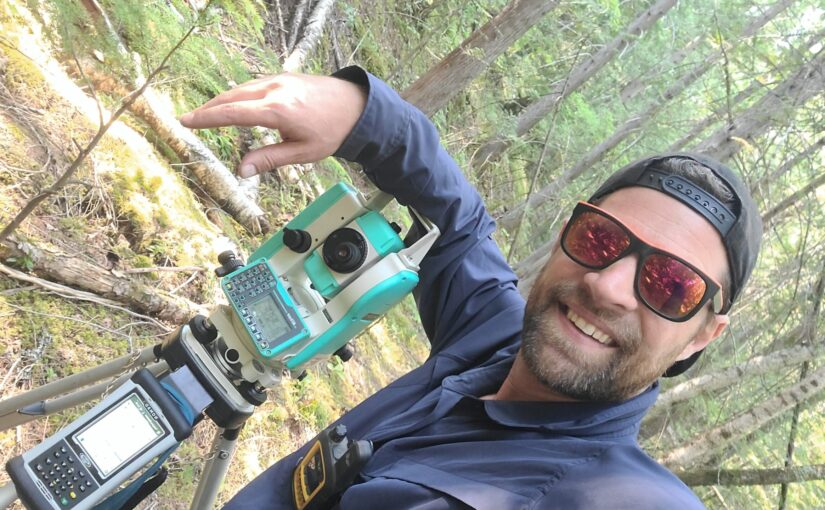
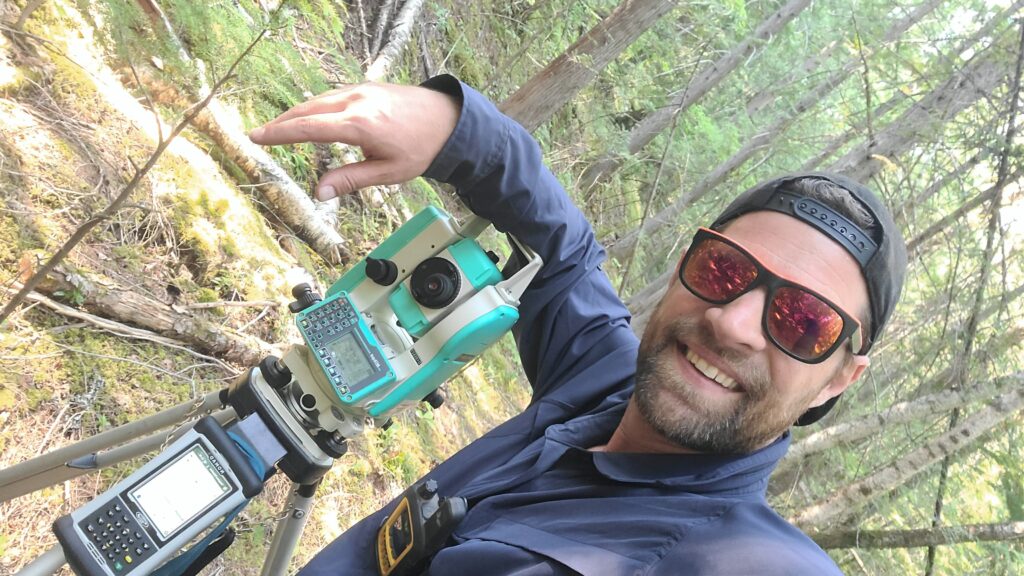
In a recent conversation with Sasha Djakovic, Geography Lab Technician at Douglas College, I was struck by how deeply experiential and relational geography education can be—especially when it is tied to land-based knowledge and Indigenous ways of knowing.

Sasha’s work, both in the lab and on the land, bridges high-tech tools like GIS and LiDAR drones with ancient stories, place names, and protocols rooted in the Lil’wat Nation’s territory. Through the Lil’wat Archaeological Research Project, he and colleagues like Bill Angelbeck, with guidance from Indigenous leaders such as Jennifer Anaquod, have facilitated a rare kind of learning: one that pairs digital mapping with spiritual respect, physical geography with oral tradition, and student development with cultural humility.

The Geography lab’s augmented reality sandbox, for instance, helps students visualize topography and contour lines in three dimensions. But Sasha reminds us that the best geography lab is still outside. In Lil’wat territory, stories like the Copper Canoe become topographical narratives—legends validated not only by tradition but also by modern science. The land itself, with its steep terrain and active volcanoes, speaks back to these stories in powerful ways.

What stood out most in our exchange was the emotional transformation students undergo during their time on these digs. From opening ceremonies with drumming to observing protocols around sacred sites and funerals, students are asked not just to learn—but to feel, to listen, and to honour. This is not just skill-building. It’s soul-building.

At a time when generative AI is rewriting the rules of what skills we offload to machines, Sasha’s reflections remind us of what we must not offload: spiritual sensitivity, ethical responsibility, and deep relational awareness with the land and its stories. These are not just Indigenous ways of knowing—they are human ones, and they’re more vital than ever.

And…good timing! This article about the archeological work came out shortly after our recorded dialogue: Archeological dig on Lil’wat territory uncovers ancient histories and reframes research relationships

Place-based learning – a few questions

Photo by Ales Krivec on Unsplash

Where am I?

What is the latitude and longitude of this place?

How far above the earth am I suspended?

Where does this water come from?

How is the coolness provided here?

Where does the warmth come from?

How is it that I am precisely at the perfect distance to the sun, so that the moon exactly eclipses the sun?[i] And the sun warms but does not destroy this place?

Where is the closest place I can walk on the earth with bare feet? Drink from a pure stream? Slip into a clean lake or river?

When was the last time I scared a mountain lion with only my voice and fierceness away from its prey and saved a little dog?[ii]

Who lived here before me? And who lived here before them? How far down would I have to dig to find the ancestors of this place? What did they find to eat, only here? Wrap themselves in, from only here? Create shelters from only here? Heal their wounds and ailments, from only here? Remember their predecessors to this place?

Who are all my relations in this place?[iii]

How will my successors appreciate what I have done here? How I have lived? What love I have received and given here?

How am I to respect, appreciate, and honour this place?

I wrote this reflecting on several overlapping themes in my work and personal life. I am participating in an Indigenous Studies Working Group at Douglas College, in conversation with friends and family who live in semi-remote rural places, and working on developing a new program that strives to use digital tools to enable instructors and students to co-create place-based learning objects that reference local history, environmental concerns, economics and vernacular sensibilities. I am interested in collaborating with others with similar interests…

by Steven Bishop


[i] As relayed during a conversation with Dr. Paul Jacobson (Jacobson, 2017)

[ii] As relayed during a conversation with Susan Aldridge, who did exactly this during a walk on her land in the Slocan Valley. (Aldridge, 2017)

[iii] “All my relations” is a saying used to express awareness of the interconnected nature of the universe. We hear it often as part of Indigenous welcoming to British Columbia post-secondary events. “It also reinforces that everyone and everything has a purpose, is worthy of respect and caring, and has a place in the grand scheme of life.” (Kaminski, 2013)