
Transformative Education Book Club – Learning that Matters: Chapter 7

A colour charcoal drawing of an open book with stems and leaves drawn on the open pages. There are a number of items you might find on a student desk.
Image created by Microsoft CoPilot with the prompt: Create an image of learning outcomes. Make it a simple color charcoal drawing
Written by Karine Hamm

Once a month, Nathan Hall (Educational Technology and Pedagogy Coordinator) hosts a book club to discuss and apply the content of the book: Learning that matters – a field guide to course design for transformative education by Zehnder, Metzker, Kleine and Alby. The book explores the idea that meaningful learning experiences don’t just happen-they have to be intentionally designed. These well-designed, innovative courses can have a lasting impact on student learning. Since you may not have the time to read the book this semester, or to join the group of inquisitive faculty for book club, I want to present a thing or two that you can try in your course, to design a more inclusive and meaningful learning experience.

Think about a learning experience that you still remember. I suspect it involved working on a project. Project-based learning is based on the notion that “The one who does the work, does the learning”. Projects thoroughly involve the learners in the process, but they also tend to be motivating perhaps because learners have agency on the topic and/or format. Another perk is that projects have a great potential for maximizing portable learning outcomes. Even from our perspective, project work is often more enjoyable to evaluate, increasing our own engagement in the task of marking. The advantages are further listed in this Chapter but based on my experience, Douglas College faculty are no strangers to projects and their benefits so I will focus on one section of this Chapter that may be new to some: strengths-focused projects.

Strength-focused projects is based on the notion that students solve problems more efficiently when taught to utilize their strengths to tackle a problem. Students find projects more meaningful when they are designed to foster reflection and develop their strengths. To apply this finding, you can use the ‘Values in Action (VIA)” website. Students complete a survey to find their five strongest strengths. In strength-focused projects, you would ask the students to either choose from their list or choose any of the strengths listed on the website to develop within the project. Ask your students to write about what it might look like to develop these strengths throughout the project. At the end of the project, students again reflect, noting how they used and developed that strength. With this priming, the project’s purpose and significance increases as the learners work on developing strength that will be useful elsewhere, while developing content knowledge. This quick exercise increases the likelihood that students will value the project and judge it to be worthwhile. Connecting student strengths to knowledge-based projects lead the way to exceptional projects.

Exceptional projects are generally authentic, collaborative and transparent, traits shared with connected assessments discussed in the previous post. Offering real-world problems to be solved by collaborative groups of students. Developing those collaborative skills while making the purpose and expectations of the project clear. These topics are beautifully described in Chapter 7 of the book and I encourage you to read further or join the Book Club meetings.

Transformative Education Book Club – Learning that Matters: Chapter 6

A colour charcoal drawing of an open book with stems and leaves drawn on the open pages. There are a number of items you might find on a student desk.
Image created by Microsoft CoPilot with the prompt: Create an image of learning outcomes. Make it a simple color charcoal drawing
Written by Karine Hamm

Once a month, Nathan Hall (Educational Technology and Pedagogy Coordinator) hosts a book club to discuss and apply the content of the book: Learning that matters – a field guide to course design for transformative education by Zehnder, Metzker, Kleine and Alby. The book explores the idea that meaningful learning experiences don’t just happen-they have to be intentionally designed. These well-designed, innovative courses can have a lasting impact on student learning. Since you may not have the time to read the book this semester, or to join the group of inquisitive faculty for book club, I want to present a thing or two that you can try in your course, to design a more inclusive and meaningful learning experience.

In Chapter 6, the authors reflect on the importance of connecting the assessments to course design. I challenge you to reflect on why assessments matter in your courses. Assessment matters to our institution (and our students) because course assessments are tied to grades and grades are used to evaluate and “sort” students. The authors define “assessment” as a tool used to make learning visible so as to inform your decision-making when assigning grades. Thoughtfully designed assessments can do more that determine grades, they have the potential to foster learning. The authors argue that for learning to be equitable and transformative, a significant number of assessments need to be designed to be connected and formative. Let’s define these words.

Connected assignments align with student learning outcomes and are designed to be transparent, holistic and affirming. You can imagine standardized tests as unconnected because the multiple-choice format is far removed from the learning experiences of the student. To create connected assignments, start by aligning them to the learning outcomes. If a learning outcome is to “compare and contrast”, a multiple-choice test would be a poorly aligned assessment because it would not allow students to compare and contrast. Second, design the assessment to be transparent for the students. Ensure that the students clearly understand the expectations, purpose and criteria for success associated with an assignment. Provide a marking rubric and perhaps a sample assignment from a previous student (with their permissions of course). Third, design the assessments to be holistic. Providing students with opportunities to express their learning in multiple ways helps reinforce learning for all students. Holistic connected assessments focus on more than just cognitive domains, they also include skills and dispositions. Remember the discussion on portable learning outcomes from a previous post? Lastly, you should aim to design assessments that are affirming to the learner. Instead of ending our relevant and authentic activities with a paper or a test, taking off points for errors and miscalculations, consider taking into account how you have ensured that students can show their learning. You can ask yourself “Have I ensured that students can demonstrate meeting the learning outcomes in multiple ways with plenty of room for improvement, feedback and support.”

Feedback is an important piece around connected assessment. It fosters learning by helping students modify their behaviour or actions. Formative assessments are great for this. You can provide feedback in anticipation of the ‘final’ assessment. Providing feedback is crucial for learning but it can sometimes make us feel overwhelmed. Especially in writing intensive courses. Although some feedback must come from you, here are other sources of feedback that can be great:

  1. Peers – but keep in mind that you will need to teach students how to give quality feedback.
  2. Self– the use of self-reflections can be powerful.
  3. Tech/Low-Tech –  use of flashcards, online quizzes or apps, can provide feedback on what students know and don’t know yet.

A truly connected approach to assessment is to co-design the assessment and evaluation strategy with your students. Consider inviting students into the conversations and ask they how they would like to demonstrate that they have achieved the learning outcomes. Consider providing feedback instead of grades early in the semester. Provide options for the ways students can demonstrate their learning and ask students to be involved in the development of the marking rubric.

This Chapter contained so much information and tips of developing an assessment plan, with a focus on connected assessments. Consider picking up the book and joining the book club for further discussion.

Transformative Education Book Club – Learning that Matters: Chapter 4

A colour charcoal drawing of an open book with stems and leaves drawn on the open pages. There are a number of items you might find on a student desk.
Image created by Microsoft CoPilot with the prompt: Create an image of learning outcomes. Make it a simple color charcoal drawing
Written by Karine Hamm

Once a month, Nathan Hall (Educational Technology and Pedagogy Coordinator) hosts a book club to discuss and apply the content of the book: Learning that matters – a field guide to course design for transformative education by Zehnder, Metzker, Kleine and Alby. The book explores the idea that meaningful learning experiences don’t just happen-they have to be intentionally designed. These well-designed, innovative courses can have a lasting impact on student learning. Since you may not have the time to read the book this semester, or to join the group of inquisitive faculty for book club, I want to present a thing or two that you can try in your course, to design a more inclusive and meaningful learning experience.

As post-secondary faculty, our commitment to fostering diverse and equitable classrooms can be exemplified through the application of Universal Design for Learning (UDL) principles. UDL is an educational framework that promotes the design of flexible and accommodating learning experiences to meet the diverse needs of all students. Creating a learning environment tailored to the most vulnerable individuals, yields benefits for everyone involved. One impactful way to integrate UDL principles into our teaching practices is by re-wording learning outcomes to ensure they are accessible to all learners. Chapter 4 of the book subtly suggests the importance of design on a transformative experience for all.

Pull out your course syllabus and let’s get started in our quest to develop student-centered, higher order, measurable, and inclusive student learning outcomes.

First, take some time to reflect on the outcomes for your course, as currently written, and ask yourself:

  1. Are the learning outcomes inclusive and acknowledge the diversity of students?
  2. Do the learning outcomes exclusively endorse a single mode of expression?
  3. Are there any avoidable obstacles presented in the learning outcomes, such as a dependence on expensive software or a requirement to be completed within a limited timeframe?
  4. Do the learning outcomes presume prerequisite knowledge or experiences that are not essential to the discipline or might be unfamiliar to some students?

Let’s start by ensuring that our learning outcomes are inclusive and align with the principles of UDL. When crafting learning outcomes, consider using language that allows learning to be demonstrated in various modes of representation. Acknowledge that students may have different learning preferences and strengths. For example:

Original Outcome:

“Students will write a paper demonstrating their understanding of the neural control of acquired movement.”

Revised UDL-Informed Outcome:

” Students will articulate their understanding of the neural control of acquired movement.”

Replacing ‘write a paper’ with ‘articulate’ allows students to express their knowledge using a variety of format. Beyond fostering motivation, catering to different abilities and offering flexibility, choice can be culturally affirming. Clearing all ambiguities in a learning outcome is also essential to respecting your students’ various cultural backgrounds. For example,

Original Outcome:

“Students will maintain professionalism during clinical placements”

Keeping in mind that the instructor may have a mental image of what “professionalism” means but students from different backgrounds may interpret ‘professionalism’ in different ways. Consider making the outcome more inclusive by making explicit the definition of “professionalism”.

Revised UDL-Informed Outcome:

“Students will adhere to the British Columbia Association of Kinesiologists Professional Guidelines by following safe clinical practices; maintaining high standards of honesty, integrity, and ethics; charting work using documents provided”.

We hear so often of students memorizing through cramming techniques, writing the exam and then quickly forgetting all that was ‘learnt’. For a truly transformative experience, we have to move beyond lower order (list, recall, identify) learning outcomes and move to higher order thinking (predict, analyze, evaluate). Go back to your learning outcomes, how are you asking your students to demonstrate learning and where do these fall on Bloom’s taxonomy?

Original Outcome:

“Students will identify the enzymes involved in the process of digestion.”

Revised Outcome:

“Students will predict outcomes when certain enzymes are released to assist in the breakdown of food.”

Consider changing the action to move your learning outcome from foundational learning to application.

Lastly, make sure you add a learning outcome for a skill that students can take from your class into the next. Portable outcomes are the broad skills that we hope students gain while working with us and they include: teamwork, creative thinking, ethical decision-making.

Sample Outcome for Communication:

“Students will effectively communicate nutrition-related advice for a wide variety of purposes and audiences.”

The take-home message is to evaluate your learning outcomes and ensure that they are student-centered (start with ‘students will’..), measurable, inclusive, higher order where possible and that you include at least one portable outcome that students can take with them beyond graduation.

The re-wording of learning outcomes is a powerful step towards fostering a transformative learning experience and a more inclusive and accessible learning environment. By recognizing and embracing the diversity of our students, we not only enhance the educational experience for all but also contribute to the development of a more equitable society. Let’s champion UDL in our teaching practices and continue to evolve as educators dedicated to the success of every learner in our classrooms.  Next month, we examine the design of congruent and connected assessments.

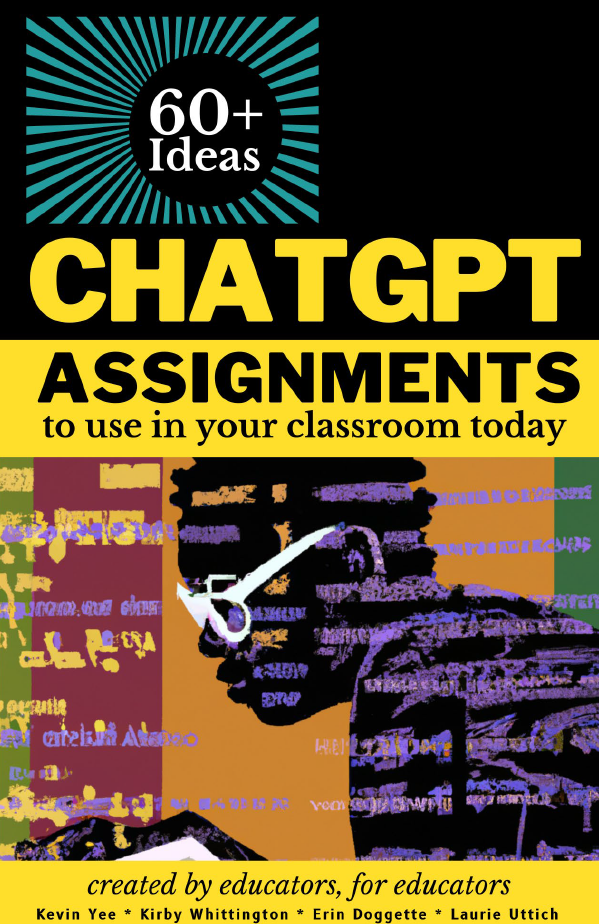
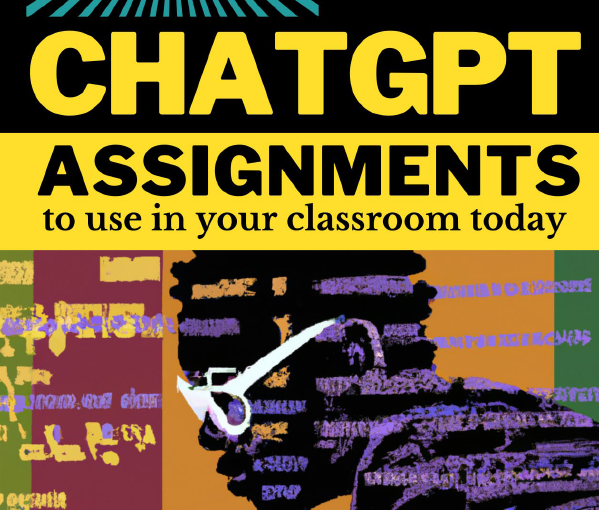
Free OER Book: ChatGPT Assignments to Use in Your Classroom Today

As part of DESC’s ongoing work to provide resources to educators across Douglas College, we provide the following Creative Commons licenced book from the University of Central Florida on creating assignments that incorporate AI chat tools such as ChatGPT. These would also work with the Douglas College access to Microsoft’s BING AI chat through our Office 365 account.

Reference:

Yee, Kevin; Whittington, Kirby; Doggette, Erin; and Uttich, Laurie, “ChatGPT Assignments to Use in Your Classroom Today” (2023). UCF Created OER Works. 8.

Cover of ChatGPT Assignments to Use in Your Classroom Today. Click on the image to download.
Click on the image above to download

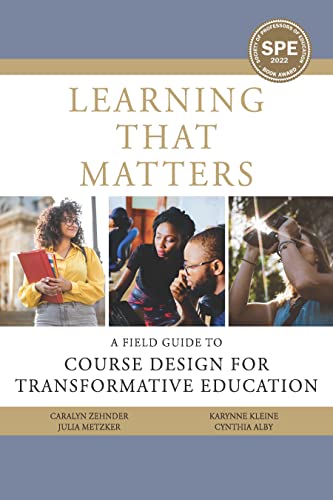
DESC Book Club -Winter 2024 “Learning That Matters”

The cover of the Learning That Matters book

When: Five Fridays 3:30-5pm in N4206 (NW campus) – January 12, February 2, March 1 & 8, and April 5

Facilitated by Nathan Hall, LLPA Teaching Faculty / Educational Technology and Pedagogy Coordinator

Please join me as we work through Learning That Matters: A Field Guide to Course Design for Transformative Education by Caralyn Zehnder, Julia Metzker, Karynne Kleine, and Cynthia Alby (Myers Education, 2021)

12 copies will be available to borrow through the library; space is limited to 15 participants.

This volume is a practical “work book” that guides post-secondary instructors in designing a student-centred learning experience.

From the authors:

Meaningful learning opportunities “don’t just happen, they need to be intentionally designed. This book supports those who will undertake this vitally important work. [This book] is a pragmatic resource for designing courses that engage college students as active citizens. This ‘work’ book provides research-informed approaches for creating learning experiences and developing innovative, intellectually-engaging courses.”

Registration form

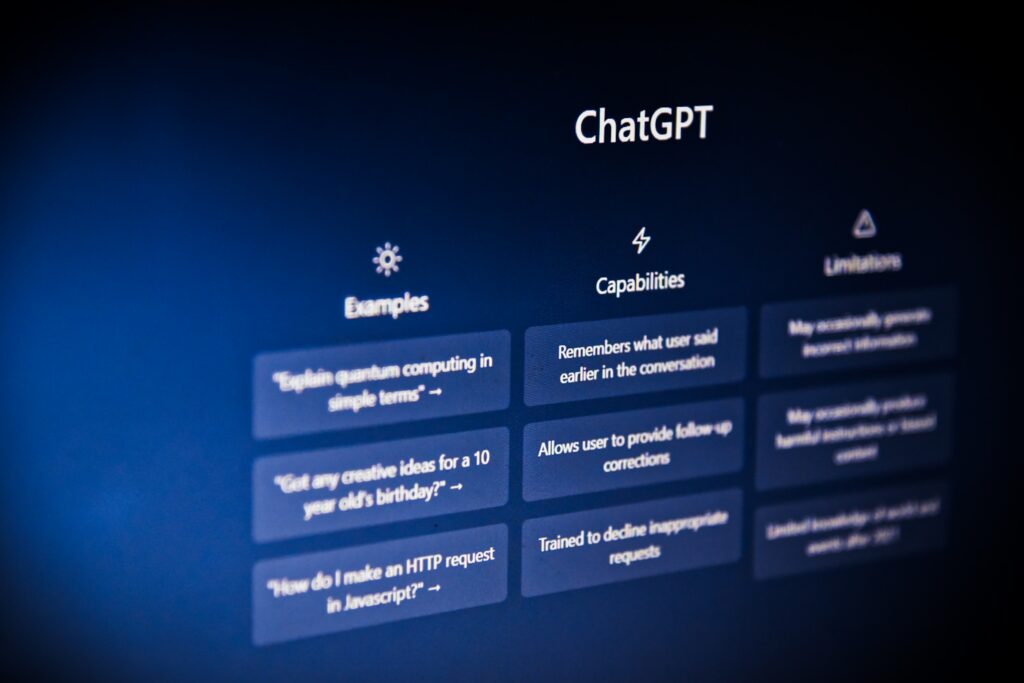
Stumbling Blocks and Stepping Stones – “AI in the classroom”

The ChatGPT main screen

Join your peers from across Douglas College as we share “Stumbling Blocks and Stepping Stones”: a monthly series celebrating our struggles and successes in teaching and learning.

Moderated by Tim Paul, Manager, Academic Technology Services and member of Douglas Educational Support Community (DESC), “Stumbling Blocks and Stepping Stones” is structured around 3 short faculty presentations and an optional 30-minute discussion time. Developed under the philosophy of professional development through collegial sharing, we hope that the experience of others will help you to find community, creativity, and the strength to explore new opportunities.

  • Theme: AI in the Classroom: Educator Experiences and Classroom Guidelines
  • Date: Tuesday, November 14
  • Time: 10:35-11:30 am

Our panelists will be:

  • Jim Palmer (Music, LLPA)
  • Nina Blanes (BSN, HS)
  • Doug Beech (Marketing, CBA)

In this session, our panelists will provide examples of how AI is utilized (and not utilized) in their classrooms, shedding light on their approaches to communicating with students about the responsible use of generative technology. Gain valuable insights and practical inspiration for your own teaching methods in this session. 

Visit the Stumbling Blocks and Stepping Stones page for the recording once the session is done.

Fundamentals of Digital Teaching and Learning – March 2021

bbacademy.blackboard.com

I just completed my Blackboard Academy certificate on Fundamentals of Digital Teaching and Learning, and thought the course was well organized and an excellent and up-to-date review of the topics, which include:
> What we know about learning
> Introduction to digital teaching
> Digital teaching approaches and the LMS
> Designing e-learning courses
> Developing e-learning content
> Principles of learner assessment and feedback
The instructor, Cynthia Crenshaw, was super engaged and encouraged me to get the most out of the course.

I was asked to take the course to learn more about the Ultra Base Navigation which the College is in process of transitioning to; additionally, I was pleasantly surprised at how the course served as a review of ideas and practices that I am quite familiar with in my daily work. The timing was interesting too—to take a course during an avalanche of work associated with helping an institution transition from in-person to remote learning is a bit crazy! So I started looking at the course as a resource to help in the planning of workshops, in the curating of content to support new-to-online instructors, and in many other ways in my daily work. The discussion posts from other participants contained valuable insights, ideas, and links to resources. Taking the time to post my thoughts in the Discussion forums served as a welcome reflection time too. I used the assignments to review a course I am designing, and found the prompts useful in that process.

#LetsAdvanceLearning #BlackboardAcademy #DTLS

Digital Humanity: Professing in Novel Times—Episode Four

This week Steven and I met up for a virtual hallway chat with Eamonn O’Laocha a Douglas College Faculty Member in the Department of Business Management. Among other things, Eamonn is working with the Douglas College Facilitating Faculty Online Group and kindly shared some of his observations about the challenging path facing faculty. In addition, Eamonn spoke to some of the work he is doing to address tech inequity and access to education.

To learn more about his work check the full article  https://www.douglascollege.ca/about-douglas/news-and-media/news/2020/May/digital-devices-donations. Eamonn’s interview is full of excellent insights and reminds us all of the importance of understanding the ‘novel’ times we are in. 

We would like to acknowledge that we live, learn, work, and play on the unceded traditional territories of the Coast Salish Peoples of the QayQayt and Kwikwetlem First Nations.

Dr. Eamonn O’Laocha
Dialogue with Eamonn, Lisa, and Steven—June 23, 2020

Eamonn referred to the work of Paulo Friere in the recording; here is a link to more information about Friere: https://infed.org/mobi/paulo-freire-dialogue-praxis-and-education/

From in-person to online course delivery within a short timeline

Technology interconnects us, as this snapshot of world-wide internet activity shows.
Image from The Opte Project
 (CC BY-NC 4.0)

“What would you do if you suddenly had to deliver your face-to-face class online, and with minimal preparation time?”
This was the question Michelle Jickling, Instructional Designer and E-Learning Developer for Douglas College’s Training Group, and Steven Bishop, Douglas College Learning Designer, discussed in the first of a series of episodes exploring digital literacies.

We used Blackboard Collaborate online meeting software to model the solutions we were proposing, since we were both at different locations. Here are the topics, images, and links discussed during the session:
Top Five Essentials for going from face-to-face course delivery to online delivery:

  1. Organize and collate the (existing) essential deliverables into a logical pattern (e.g., navigation information, weekly content folders, and assessment descriptions).
  2. Decide what kinds of communication are most practical (e.g., course messages, email, synchronous online meetings, and asynchronous discussion forums).
  3. Work backwards from the (existing) means of assessment to develop the assessment tools, Grade Center, and communication of grades and feedback to students.
  4. Set up the course for basic delivery (e.g., create content areas, folders, items; upload files).
  5. Deploy Blackboard tools as appropriate for all of the above.

Additional Considerations:

  • Student communications: synchronous meetings may be limited due to bandwidth, or access to reliable online services.
  • Means of assessment: other than proctored examination, Blackboard assessments would primarily be useful as open-book quizzes and formative assessments.
  • Instructional presence: an essential consideration not addressed in the list above.

SAMR = Substitution, Augmentation, Modification, and Redefinition

How Technology Can Improve Learner-Centred Teaching

Douglas College Blackboard Faculty Resources

DEN (Douglas Educators Network) Blackboard Organization

Blackboard Collaborate online meeting software—Help for Moderators

We would like to acknowledge that we live, learn, work, and play on the unceded traditional territories of the Coast Salish Peoples of the QayQayt and Kwikwetlem First Nations.

Designing learning experiences

Part 1 of a series

by Steven Bishop

Michelle Jickling, who is currently working as an Instructional Designer and eLearning Developer with the Training Group at Douglas College, and I sat down for a conversation about the essentials of helping subject-matter experts and instructors with course development. We specifically addressed some of the initial concerns with translating the expert’s knowledge to an online environment, such as the Blackboard LMS currently used by the College.

Our discussion touched on:

  • Starting from scratch: storyboarding, assessing learning needs, organizing existing content, reviewing the learning goals
  • Meeting desired outcomes vs. delivery of information
  • Scaffolding into advanced knowledge
  • Iterative processes and updating content
  • Discipline-specific priorities
  • Synchronous and asynchronous modalities – how best to meet the student where they are
  • Modern educational and life challenges for students
  • Relevancy in course design and assessments
  • Balancing an expert’s knowledge with time constraints (the 80:20 rule)
  • Time expectations
Listen to the 8:30 minute recorded dialogue

We would like to acknowledge that we live, learn, work, and play on the unceded traditional territories of the Coast Salish Peoples of the QayQayt and Kwikwetlem First Nations.