Mapping More Than Terrain: Land, Story, and Spirit in the Geography Lab

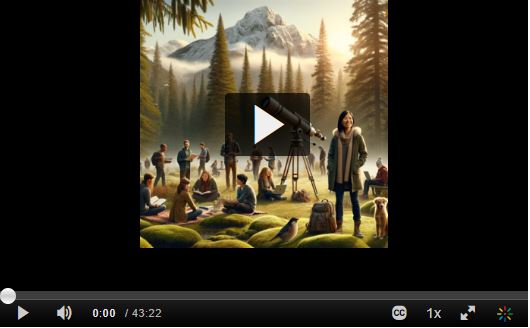
In a recent conversation with Sasha Djakovic, Geography Lab Technician at Douglas College, I was struck by how deeply experiential and relational geography education can be—especially when it is tied to land-based knowledge and Indigenous ways of knowing.

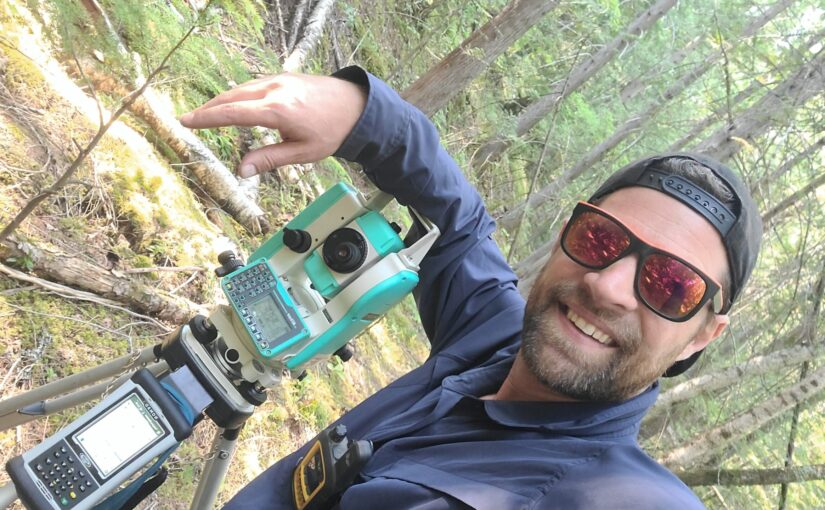
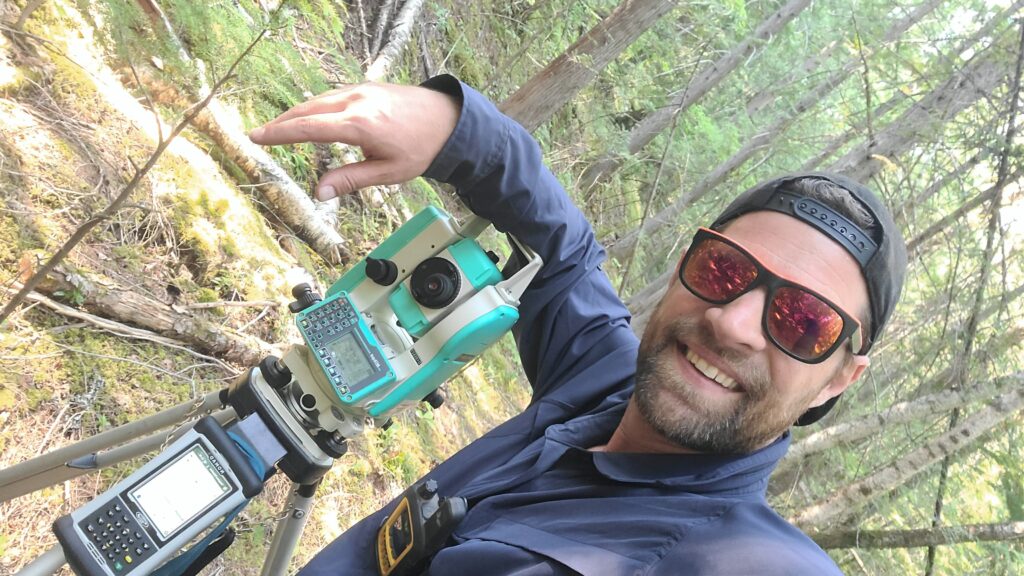
Sasha’s work, both in the lab and on the land, bridges high-tech tools like GIS and LiDAR drones with ancient stories, place names, and protocols rooted in the Lil’wat Nation’s territory. Through the Lil’wat Archaeological Research Project, he and colleagues like Bill Angelbeck, with guidance from Indigenous leaders such as Jennifer Anaquod, have facilitated a rare kind of learning: one that pairs digital mapping with spiritual respect, physical geography with oral tradition, and student development with cultural humility.

The Geography lab’s augmented reality sandbox, for instance, helps students visualize topography and contour lines in three dimensions. But Sasha reminds us that the best geography lab is still outside. In Lil’wat territory, stories like the Copper Canoe become topographical narratives—legends validated not only by tradition but also by modern science. The land itself, with its steep terrain and active volcanoes, speaks back to these stories in powerful ways.

What stood out most in our exchange was the emotional transformation students undergo during their time on these digs. From opening ceremonies with drumming to observing protocols around sacred sites and funerals, students are asked not just to learn—but to feel, to listen, and to honour. This is not just skill-building. It’s soul-building.

At a time when generative AI is rewriting the rules of what skills we offload to machines, Sasha’s reflections remind us of what we must not offload: spiritual sensitivity, ethical responsibility, and deep relational awareness with the land and its stories. These are not just Indigenous ways of knowing—they are human ones, and they’re more vital than ever.

And…good timing! This article about the archeological work came out shortly after our recorded dialogue: Archeological dig on Lil’wat territory uncovers ancient histories and reframes research relationships

Embracing discomfort: Navigating the stumbling blocks and stepping stones of Indigenization

These video excerpts are from the March 21 Stumbling Blocks and Stepping Stones hosted by Jennifer Anaquod.

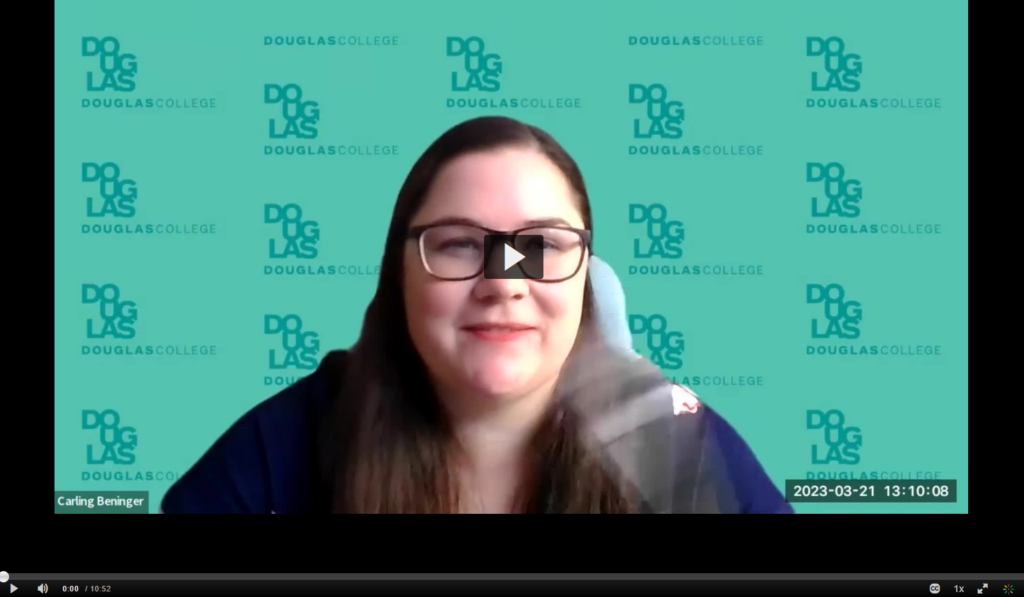
Carling Beninger

  • Carling expresses discomfort as a white settler teaching Indigenous history classes and discuss how she has navigated this by listening, centering Indigenous voices, and bringing in guest lecturers.
  • Carling mentions the importance of compensating Indigenous guest speakers for their time through an honourarium and providing a gift as per Indigenous protocol.
  • She aims to create a safe and inclusive environment for students, acknowledging the diverse backgrounds and experiences of her students.
  • She uses innovative teaching methods, such as having students perform an act of reconciliation, which has allowed some Indigenous students to connect with their culture.
  • Carling believes that education is a crucial part of reconciliation and feels fortunate to play a role in sharing Indigenous history with her students.

Click on the image below to watch Carling speak about her journey.

Click to hear Carling talk about her journey.

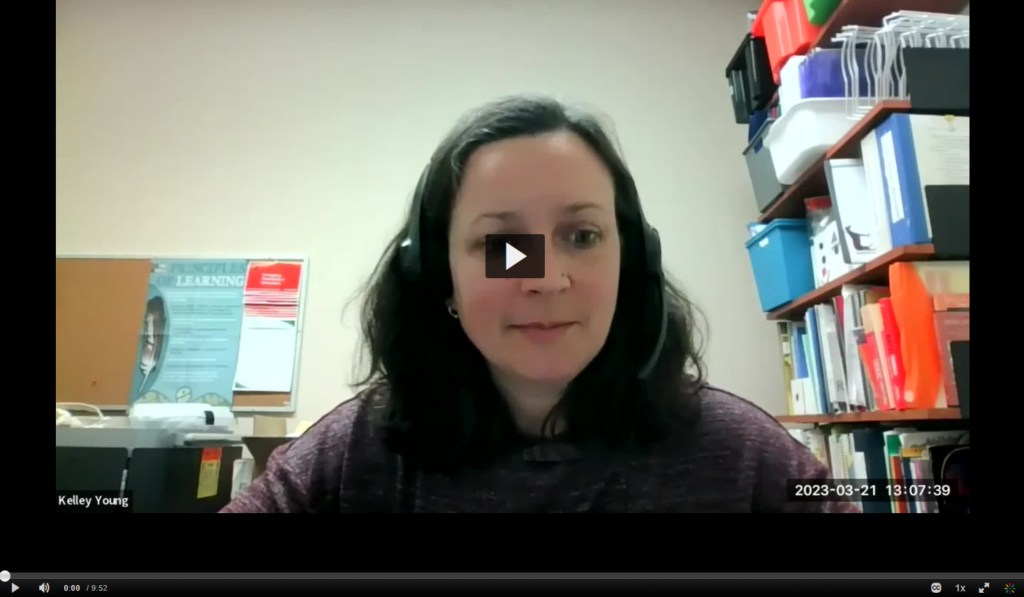
Kelley Young

  • Kelley is part of a pilot project in the Northwest Territories, teaching online courses for people who are in the role of educational assistance.
  • She acknowledges past mistakes and misunderstandings when working with Indigenous students and families, and is committed to learning and growing.
  • She has made changes to her teaching approach, such as leaving more space for conversation and wait time during live Zoom sessions, and using a Padlet for sharing and discussion.
  • Kelley values the connections made with people in the course and appreciates when they share their experiences and knowledge.

Click on the image below to watch Kelley speak about her journey.

Click to listen to Kelley talk about her journey

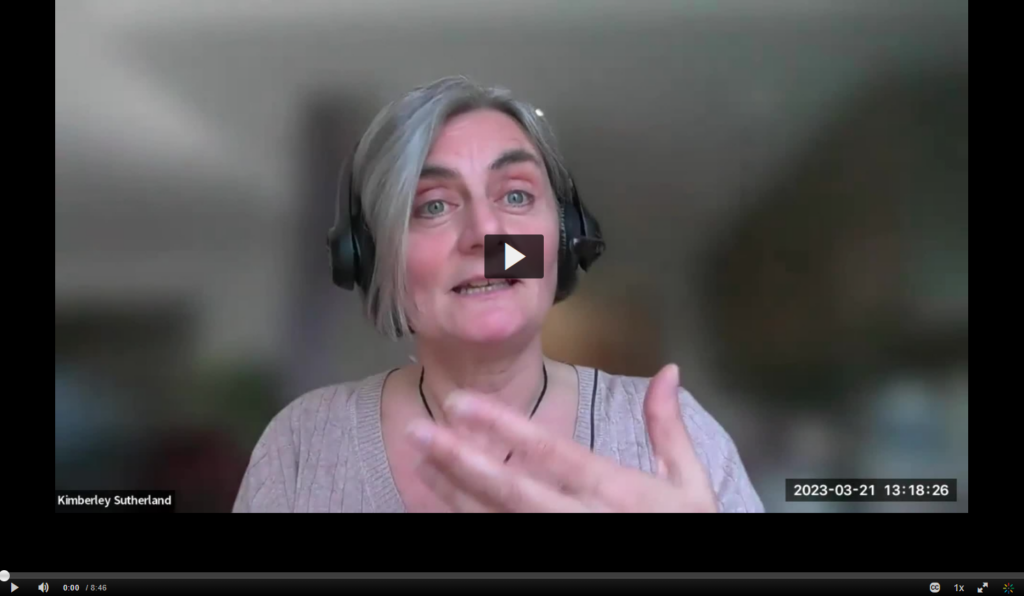
Kimberley Sutherland

  • Kimberley acknowledges feeling discomfort and uncertainty, especially when making territorial acknowledgments in front of her students. She tries to engage her students in these discussions and shares her own learning journey.
  • She values the connections made with people in her course and appreciates when they share their experiences and knowledge.
  • She acknowledges past mistakes and misunderstandings and is committed to learning and growing.
  • Kimberley believes in the importance of moving forward despite discomfort and uncertainty, recognizing her position of privilege, and empathizing with those who do not share that privilege.

Click on the image below to watch Kimberley speak about her journey.

Click to listen to Kimberley talk about her journey.

Reimagining Post-Secondary Education with Aunt Marny and Jennifer Anaquod

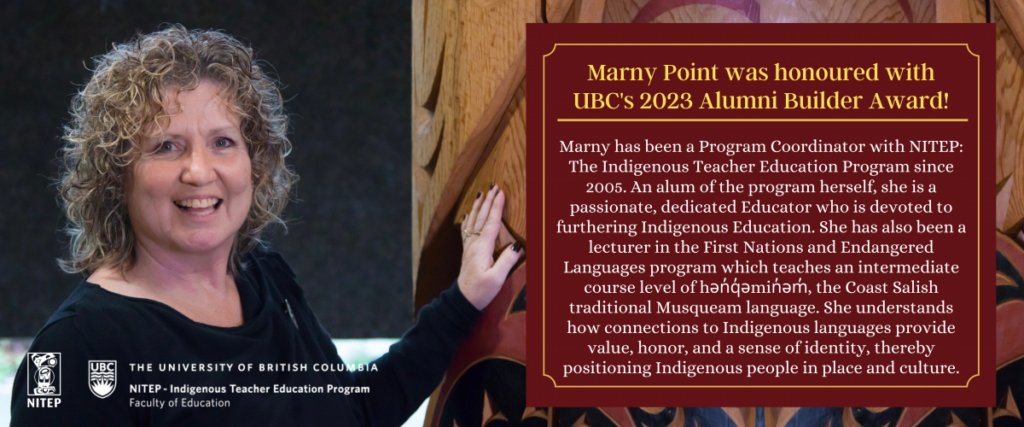
Marny Point – Program Coordinator/ Instructor for the NITEP

Jennifer Anaquod – Director, Indigenous Academic Initiatives

Links and notes

Truth and Reconciliation Commission of Canada

Statement of apology to former students of Indian Residential Schools

First Peoples Principles of Learning

Shawn A-in-chut Atleo (Ahousaht First Nation, born 1967), is an activist and politician, a former National Chief of the Assembly of First Nations in Canada (serving 2009 to 2014). He also has served since 1999 as a Hereditary Chief of the Ahousaht First Nation, part of the Nuu-chah-nulth Nation based in British Columbia.

Indian Control of Indian Education

Chief Dan George’s “Lament for Confederation”

Dr. Kirkness

Dr. Archibald

First Nations Education Steering Committee

The new graduation component for every student in Canada

Indigenous people got the vote; UNDRIP “human beings”

Sinixt people in Kootenays

Peter Cole _ Indigenous Curriculum Professor at UBC

Leanne Simpson

Dr. Michael Marker UBC

Universal Design for Learning

Liberating Structures

The Whole School

Forest Schools

Valhalla Wilderness Program

Word of the Day drop-in language class on Wednesdays, 10:00-11:00 in the Indigenous Gathering Place

Cia Verschelden Recovering Bandwidth Tax of Uncertainty

42:45 háy̓sxʷ q̓ə! or Huy ch q’u.

First Nations House of Learning

University of Alberta Indigenous Research Guide

Tea and Bannock with Aunty Marny – November 8, 2023

Headshot of Elder Marny Point

Join us on November 8 from 10-12 pm for tea and bannock in the Indigenous Gathering Place at the New Westminster Campus to meet our New Elder in residence. Please feel free to drop by anytime. 

Marny Point is from the Musqueam band, of the Coast Salish people.  She earned both her degrees: A Bachelor of Education & Master of Educational Technology and is currently a Ph.D. student in LLED at UBC. Marny has taught for NITEP UBC’s Indigenous Bachelor of Education program as well as in the First Nation’s Endangered Language Program Instructor, teaching the traditional Musqueam language course, hən̓ q̓ əmin̓ əm̓ from 2002 until 2019. She understands how the connection to Indigenous languages; gives value, honour and a sense of identity, which cements Native Indigenous, people in place and culture. Marny is an avid fisherwoman – owning and operating her own gillnetter. Harvesting sockeye salmon from the Fraser River, as her dad and grandfather always did. Marny is actively involved in the education of the Indigenous youth and sits on many committees to ensure the betterment of Indigenous education. 

Reimagining Post-Secondary Education with Jennifer Anaquod

Show notes and links mentioned in the recording

Conversation between Jennifer Anaquod, Director, Indigenous Academic Initiatives, and Steven Bishop, Learning Designer, Academic Technology Services

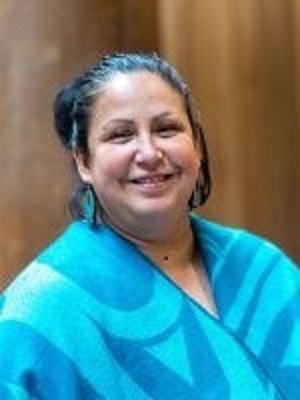
Jennifer Anaquod with a blue shawl

Land Acknowledgement

Douglas College respectfully acknowledges that our campuses are located on the unceded traditional and ancestral lands of the Coast Salish Peoples, including the territories of the q̓íc̓əy̓ (Katzie), qʼʷa:n̓ƛʼən̓ (Kwantlen), kʷikʷəƛ̓əm (Kwikwetlem), xʷməθkʷəy̓əm (Musqueam), and qiqéyt (Qayqayt) First Nations.

Jennifer Anaquod, Anishinaabe from Treaty 4 Territory in Saskatchewan

Steven Bishop, from the unceded territory of the Coast Salish people. Originally, from the traditional lands of the Puyallup Tribe.