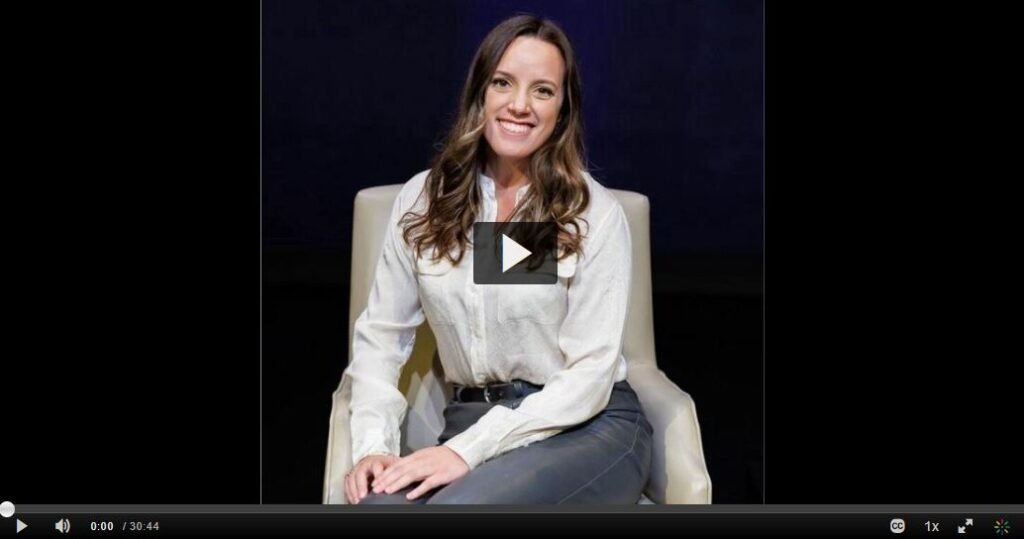
This video is taken from the February 26, 2024 Stumbling Blocks and Stepping Stones on Accomodation Requests and Faculty Readiness. Here is a summary of what Sarah shared with us.
The psychiatric nursing department noticed an increase in accommodation requests from students, particularly for extended testing time.
They held a meeting with Accessibility Services and Health Sciences to discuss the impact of these accommodations on Psychiatric Nursing and competencies.
Sarah proposed the idea of universal accommodations, where all students would receive time and a half for their testing, regardless of whether they had an identified accommodation.
This approach was seen as equitable, inclusive, and reduced anxiety for all students. It also prevented students from missing curriculum content due to extended exam times.
The department approved the implementation of universal accommodations for most courses, with exceptions for clinical or simulated testing involving patients or clients, and for students who required separate rooms or double time.
The new process was successfully implemented in the fall, with all faculty buying in, and they plan to continue with this approach.
Click on the image above to watch Sarah speak on universal accomodations
Karine Hamm (Sports Science Diploma Coordinator) and I met with Bailey Cove, a former student of Karine’s, to discuss her ideas on the topic of Reimagining Post-Secondary Education. Bailey has been volunteering since high-school, and provided this list of recent positions she has served in:
Douglas Students’ Union (DSU) Director of College Relations (1 year)
Douglas College (DC) Board of Governors (1 year)
Douglas Students’ Union (DSU) Director of External Relations (1 year)
DSU Budget and Operations Committee (member)
DSU Campus Life Working Group (member)
DSU/DC Joint Operations (member)
Douglas College Education Council College Board Liaison
Douglas College Campus Planning Committee (member)
DSU Campaigns Working Group (Chair)
Bailey shared her thoughts on the student experience of post-secondary education from a highly-informed perspective. Enjoy listening to a discussion of what works, what needs improvement, and what new directions we can imagine.
Quote from Neighbourhood Houses – Edited by Ming Chung Yan and Sean Lauer: “The community problem is generally considered to comprise the following problems of connection and engagement: the avoidance and superficial level of interaction, the living together at high densities as strangers, and the feeling of isolation while surrounded by others. This can lead to alienation and a social disconnection from the social world around us. As a form of social infrastructure focused on the development of relationships and social capacity, neighbourhood houses have the potential to contribute to the ideal of creating welcoming communities in cities and societies that are often less than welcoming and supportive for marginalized, racialized, and disadvantaged groups.”
Yuval Noah Harari on storytelling– “Homo sapiens is a storytelling animal that thinks in stories rather than in numbers or graphs, and believes that the universe itself works like a story, replete with heroes and villains, conflicts and resolutions, climaxes and happy endings. When we look for the meaning of life, we want a story that will explain what reality is all about and what my particular role is in the cosmic drama. This role makes me a part of something bigger than myself, and gives meaning to all my experiences and choices.”
“Never doubt that a small group of thoughtful, committed citizens can change the world; indeed, it’s the only thing that ever has.” Margaret Mead
There has been a noticeable increase in the use of educational technology, especially since the entire College went online in March 2020. Now, with the ubiquitous presence of Artificial Intelligence, and all the effects on education, work, and our lives, it is important to claim our humanity.
A workshop with Mitra Manesh, senior mindfulness educator at UCLA’s Mindful Awareness Research Center, with four decades of experience helping people of all ages and many different cultures live, love, and lead more consciously. Mitra has created self-coaching and professional coaching programs, and her clients range from individuals to institutions seeking balance. Some of her prior experience in Canada includes working as a Human Right Commissioner in Ontario and serving as a CBC commentator/panelist. Visit Mitra’s website for more information on her work.
The in-person workshop will be in the Indigenous Gathering Place (S4650) on Wednesday, May 15, from 2:00 pm to 4:00 pm.
Image created by Microsoft CoPilot with the prompt: Create an image of learning outcomes. Make it a simple color charcoal drawing
Written by Karine Hamm
Once a month, Nathan Hall (Educational Technology and Pedagogy Coordinator) hosts a book club to discuss and apply the content of the book: Learning that matters – a field guide to course design for transformative education by Zehnder, Metzker, Kleine and Alby. The book explores the idea that meaningful learning experiences don’t just happen-they have to be intentionally designed. These well-designed, innovative courses can have a lasting impact on student learning. Since you may not have the time to read the book this semester, or to join the group of inquisitive faculty for book club, I want to present a thing or two that you can try in your course, to design a more inclusive and meaningful learning experience.
Think about a learning experience that you still remember. I suspect it involved working on a project. Project-based learning is based on the notion that “The one who does the work, does the learning”. Projects thoroughly involve the learners in the process, but they also tend to be motivating perhaps because learners have agency on the topic and/or format. Another perk is that projects have a great potential for maximizing portable learning outcomes. Even from our perspective, project work is often more enjoyable to evaluate, increasing our own engagement in the task of marking. The advantages are further listed in this Chapter but based on my experience, Douglas College faculty are no strangers to projects and their benefits so I will focus on one section of this Chapter that may be new to some: strengths-focused projects.
Strength-focused projects is based on the notion that students solve problems more efficiently when taught to utilize their strengths to tackle a problem. Students find projects more meaningful when they are designed to foster reflection and develop their strengths. To apply this finding, you can use the ‘Values in Action (VIA)” website. Students complete a survey to find their five strongest strengths. In strength-focused projects, you would ask the students to either choose from their list or choose any of the strengths listed on the website to develop within the project. Ask your students to write about what it might look like to develop these strengths throughout the project. At the end of the project, students again reflect, noting how they used and developed that strength. With this priming, the project’s purpose and significance increases as the learners work on developing strength that will be useful elsewhere, while developing content knowledge. This quick exercise increases the likelihood that students will value the project and judge it to be worthwhile. Connecting student strengths to knowledge-based projects lead the way to exceptional projects.
Exceptional projects are generally authentic, collaborative and transparent, traits shared with connected assessments discussed in the previous post. Offering real-world problems to be solved by collaborative groups of students. Developing those collaborative skills while making the purpose and expectations of the project clear. These topics are beautifully described in Chapter 7 of the book and I encourage you to read further or join the Book Club meetings.
Image created by Microsoft CoPilot with the prompt: Create an image of learning outcomes. Make it a simple color charcoal drawing
Written by Karine Hamm
Once a month, Nathan Hall (Educational Technology and Pedagogy Coordinator) hosts a book club to discuss and apply the content of the book: Learning that matters – a field guide to course design for transformative education by Zehnder, Metzker, Kleine and Alby. The book explores the idea that meaningful learning experiences don’t just happen-they have to be intentionally designed. These well-designed, innovative courses can have a lasting impact on student learning. Since you may not have the time to read the book this semester, or to join the group of inquisitive faculty for book club, I want to present a thing or two that you can try in your course, to design a more inclusive and meaningful learning experience.
In Chapter 6, the authors reflect on the importance of connecting the assessments to course design. I challenge you to reflect on why assessments matter in your courses. Assessment matters to our institution (and our students) because course assessments are tied to grades and grades are used to evaluate and “sort” students. The authors define “assessment” as a tool used to make learning visible so as to inform your decision-making when assigning grades. Thoughtfully designed assessments can do more that determine grades, they have the potential to foster learning. The authors argue that for learning to be equitable and transformative, a significant number of assessments need to be designed to be connected and formative. Let’s define these words.
Connected assignments align with student learning outcomes and are designed to be transparent, holistic and affirming. You can imagine standardized tests as unconnected because the multiple-choice format is far removed from the learning experiences of the student. To create connected assignments, start by aligning them to the learning outcomes. If a learning outcome is to “compare and contrast”, a multiple-choice test would be a poorly aligned assessment because it would not allow students to compare and contrast. Second, design the assessment to be transparent for the students. Ensure that the students clearly understand the expectations, purpose and criteria for success associated with an assignment. Provide a marking rubric and perhaps a sample assignment from a previous student (with their permissions of course). Third, design the assessments to be holistic. Providing students with opportunities to express their learning in multiple ways helps reinforce learning for all students. Holistic connected assessments focus on more than just cognitive domains, they also include skills and dispositions. Remember the discussion on portable learning outcomes from a previous post? Lastly, you should aim to design assessments that are affirming to the learner. Instead of ending our relevant and authentic activities with a paper or a test, taking off points for errors and miscalculations, consider taking into account how you have ensured that students can show their learning. You can ask yourself “Have I ensured that students can demonstrate meeting the learning outcomes in multiple ways with plenty of room for improvement, feedback and support.”
Feedback is an important piece around connected assessment. It fosters learning by helping students modify their behaviour or actions. Formative assessments are great for this. You can provide feedback in anticipation of the ‘final’ assessment. Providing feedback is crucial for learning but it can sometimes make us feel overwhelmed. Especially in writing intensive courses. Although some feedback must come from you, here are other sources of feedback that can be great:
Peers – but keep in mind that you will need to teach students how to give quality feedback.
Self– the use of self-reflections can be powerful.
Tech/Low-Tech – use of flashcards, online quizzes or apps, can provide feedback on what students know and don’t know yet.
A truly connected approach to assessment is to co-design the assessment and evaluation strategy with your students. Consider inviting students into the conversations and ask they how they would like to demonstrate that they have achieved the learning outcomes. Consider providing feedback instead of grades early in the semester. Provide options for the ways students can demonstrate their learning and ask students to be involved in the development of the marking rubric.
This Chapter contained so much information and tips of developing an assessment plan, with a focus on connected assessments. Consider picking up the book and joining the book club for further discussion.
Dr. Kimberley Tanner – Researcher focusing on biology and science education research, specifically on developing assessment tools to understand how people from K-12 to practicing scientists conceptualize science.
Karine Hamm (Sports Science Diploma Coordinator) and I met with Colleen Reid (Faculty Researcher and Therapeutic Recreation faculty) and Ruhina Rana (Health Sciences Research Coordinator) to discuss their ideas on the topic of Reimagining Post-Secondary Education. Colleen and Ruhina were both members of the inaugural HiPE – High Impact Practices in Education – committee. They created the committee as a support to the Office of Research and Innovation. They bring their perspective on the moral imperative we have to offer undergraduate research opportunities at Douglas College despite being a teaching intensive institution. Join our chat as we discuss how HiPE aims to re-configure post-secondary education to adapt to the changing landscape of employability.
Image created by Microsoft CoPilot with the prompt: Create an image of learning outcomes. Make it a simple color charcoal drawing
Written by Karine Hamm
Once a month, Nathan Hall (Educational Technology and Pedagogy Coordinator) hosts a book club to discuss and apply the content of the book: Learning that matters – a field guide to course design for transformative education by Zehnder, Metzker, Kleine and Alby. The book explores the idea that meaningful learning experiences don’t just happen-they have to be intentionally designed. These well-designed, innovative courses can have a lasting impact on student learning. Since you may not have the time to read the book this semester, or to join the group of inquisitive faculty for book club, I want to present a thing or two that you can try in your course, to design a more inclusive and meaningful learning experience.
As post-secondary faculty, our commitment to fostering diverse and equitable classrooms can be exemplified through the application of Universal Design for Learning (UDL) principles. UDL is an educational framework that promotes the design of flexible and accommodating learning experiences to meet the diverse needs of all students. Creating a learning environment tailored to the most vulnerable individuals, yields benefits for everyone involved. One impactful way to integrate UDL principles into our teaching practices is by re-wording learning outcomes to ensure they are accessible to all learners. Chapter 4 of the book subtly suggests the importance of design on a transformative experience for all.
Pull out your course syllabus and let’s get started in our quest to develop student-centered, higher order, measurable, and inclusive student learning outcomes.
First, take some time to reflect on the outcomes for your course, as currently written, and ask yourself:
Are the learning outcomes inclusive and acknowledge the diversity of students?
Do the learning outcomes exclusively endorse a single mode of expression?
Are there any avoidable obstacles presented in the learning outcomes, such as a dependence on expensive software or a requirement to be completed within a limited timeframe?
Do the learning outcomes presume prerequisite knowledge or experiences that are not essential to the discipline or might be unfamiliar to some students?
Let’s start by ensuring that our learning outcomes are inclusive and align with the principles of UDL. When crafting learning outcomes, consider using language that allows learning to be demonstrated in various modes of representation. Acknowledge that students may have different learning preferences and strengths. For example:
Original Outcome:
“Students will write a paper demonstrating their understanding of the neural control of acquired movement.”
Revised UDL-Informed Outcome:
” Students will articulate their understanding of the neural control of acquired movement.”
Replacing ‘write a paper’ with ‘articulate’ allows students to express their knowledge using a variety of format. Beyond fostering motivation, catering to different abilities and offering flexibility, choice can be culturally affirming. Clearing all ambiguities in a learning outcome is also essential to respecting your students’ various cultural backgrounds. For example,
Original Outcome:
“Students will maintain professionalism during clinical placements”
Keeping in mind that the instructor may have a mental image of what “professionalism” means but students from different backgrounds may interpret ‘professionalism’ in different ways. Consider making the outcome more inclusive by making explicit the definition of “professionalism”.
Revised UDL-Informed Outcome:
“Students will adhere to the British Columbia Association of Kinesiologists Professional Guidelines by following safe clinical practices; maintaining high standards of honesty, integrity, and ethics; charting work using documents provided”.
We hear so often of students memorizing through cramming techniques, writing the exam and then quickly forgetting all that was ‘learnt’. For a truly transformative experience, we have to move beyond lower order (list, recall, identify) learning outcomes and move to higher order thinking (predict, analyze, evaluate). Go back to your learning outcomes, how are you asking your students to demonstrate learning and where do these fall on Bloom’s taxonomy?
Original Outcome:
“Students will identify the enzymes involved in the process of digestion.”
Revised Outcome:
“Students will predict outcomes when certain enzymes are released to assist in the breakdown of food.”
Consider changing the action to move your learning outcome from foundational learning to application.
Lastly, make sure you add a learning outcome for a skill that students can take from your class into the next. Portable outcomes are the broad skills that we hope students gain while working with us and they include: teamwork, creative thinking, ethical decision-making.
Sample Outcome for Communication:
“Students will effectively communicate nutrition-related advice for a wide variety of purposes and audiences.”
The take-home message is to evaluate your learning outcomes and ensure that they are student-centered (start with ‘students will’..), measurable, inclusive, higher order where possible and that you include at least one portable outcome that students can take with them beyond graduation.
The re-wording of learning outcomes is a powerful step towards fostering a transformative learning experience and a more inclusive and accessible learning environment. By recognizing and embracing the diversity of our students, we not only enhance the educational experience for all but also contribute to the development of a more equitable society. Let’s champion UDL in our teaching practices and continue to evolve as educators dedicated to the success of every learner in our classrooms. Next month, we examine the design of congruent and connected assessments.
Join DESC (Douglas Educational Support Community) for this introductory session on UDL and how small changes to instructional delivery can create significant impact on both the student and instructor experience. Be prepared for an interactive experience (using UDL principles) with your phone/tablet. There will be an opportunity to ask questions throughout.
Date: Monday, February 26
Time: 9:30-11:00 am
Location: We will be face to face! Come to room N3408.
Justine Charrier, Coordinator and Accessibility Specialist in Accessibility Services. She began her career at Douglas in 2015 working in the Vocational Education & Skills Training (VEST) department. Her background in Accessibility having worked in both the public and private sectors aided in the support she was able to offer students, staff and faculty. She transitioned into the Accessibility Services department in 2018 and has provided support to students, staff and faculty with regards to Assistive Technology, Accommodation Planning and Coordinating. Justine has been asked to advise on many issues surrounding accessibility such as; best practices incorporating UDL in curriculum, technology solutions, and accessible planning during renovations; to name a few. While completing her Masters of Education with a specialty in Curriculum and Instruction for Post-Secondary, her focused research project was A Comprehensive Post-Secondary Educator’s Guide to Accessibility Using Universal Design for Learning (UDL) Principles. Justine strives to provide a space where students feel supported and equal access is provided.
Rowan Lupton, Accessibility Specialist in Accessibility Services. Rowan has worked in Accessibility Services in postsecondary for fifteen years. She has also taught EASL and study skills classes. She has been a keen student of UDL since completing her Masters in Education and is currently working on incorporating UDL for equity and to support executive functioning into her work with students.