When things go sour

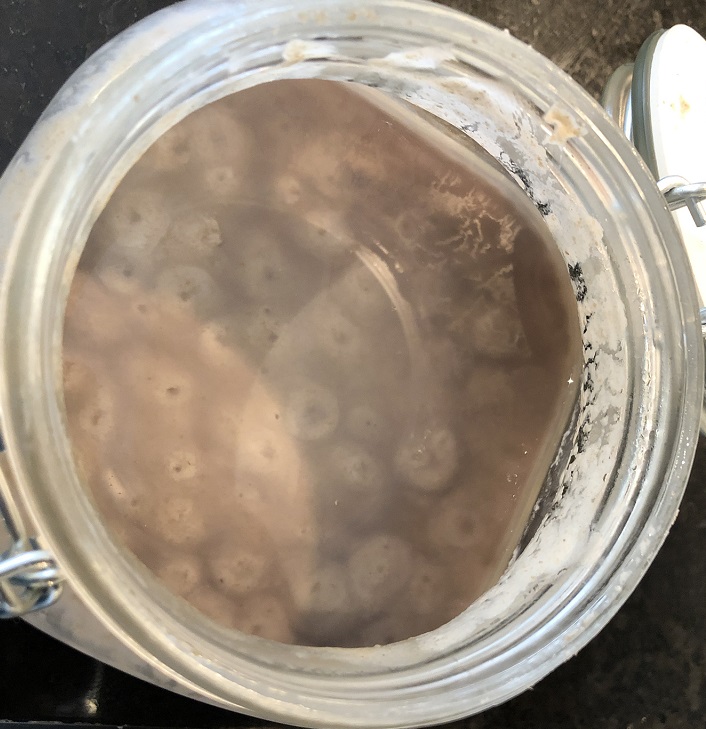
Like many in quarantine, I decided to try making sourdough bread. I pulled the neglected jar of starter out of the fridge and read the instructions from the friend who had given it to me months earlier. I realized the starter did not look too good, texted my friend for further directions, and accepted the response that I had been a ā€œbad bad boyā€.  

Neglected starter

After resuscitating the starter, and following the recipe, I succeeded in baking a passable bread. My subsequent attempts were disappointing. One time I had to bake the dough because it was so sticky, I otherwise could not figure out how to dispose of it.
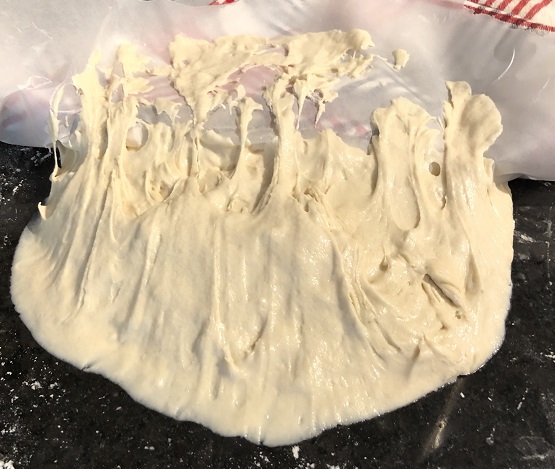
way too sticky

I do not like failure; so, I kept trying. Other people’s recipes and suggestions, internet searches, the Tartine Bread book, live chat with an experienced baker. I was still making less than hoped for loaves….

One over-tasking, multi-pressured morning, I lost it. I blamed the crummy scale that kept turning off midway through refreshing the starter. I blamed the recipes, the flour, the water, the process itself, the absurdity of life. I felt discouraged and angry at the whole endeavor. As my fit subsided, I did a bit of self-reflection (and apologizing). That is when the thought came to me, maybe many of the instructors I had been trying to support over the last many weeks in the sudden transition to remote teaching were experiencing analogous frustrations with Blackboard, online anything/everything, and technology in general. Maybe my frustration had some parallel to what instructors feel when they are trying to learn unfamiliar tools and strategies—following the various ā€œrecipesā€ provided.

The little leaven of fellow-feeling activated something in me. Learning a new skill is hard work. Learning under pressure, in new environments, and in isolation is even harder. The loaves are getting more consistent, the process more familiar, the bread delicious and well-raised.
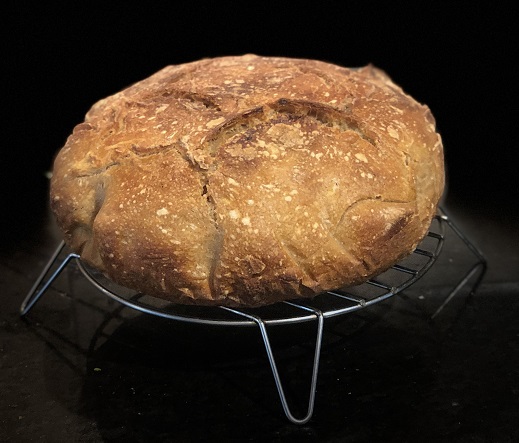
Baking bread is nothing like remotely instructing dozens of young people, and ensuring they have the best possible educational experience. Producing an instructional environment is necessary. Not the only, but a very important, aspect of instruction. Each iteration shows development and improvement. Maybe analogous to bulk fermentation. Rest and ā€œfolding inā€ are critical elements as well… the analogies keep coming – (ā€œfaculty mentors are like sourdough starterā€ ā€œtoo much incorporated fermentation is like an over-bloated courseā€) – I think you get the idea.

I am a beginner, learning to value processes. My own, and those I am attempting to support, and feel humbled and encouraged to keep going. I have a growing appreciation for the opportunity to work with so many fine educators.
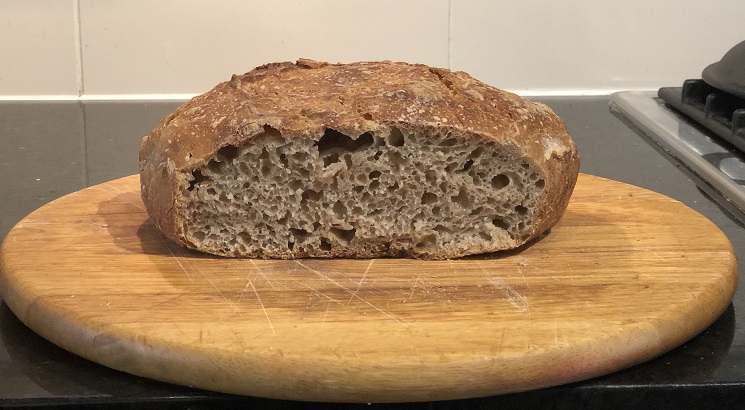
when things go sour, add some flour

We would like to acknowledge that we live, learn, work, and play on the unceded traditional territories of the Coast Salish Peoples of the QayQayt and Kwikwetlem First Nations.

Digital Humanity: Professing in Novel Times—Episode Two

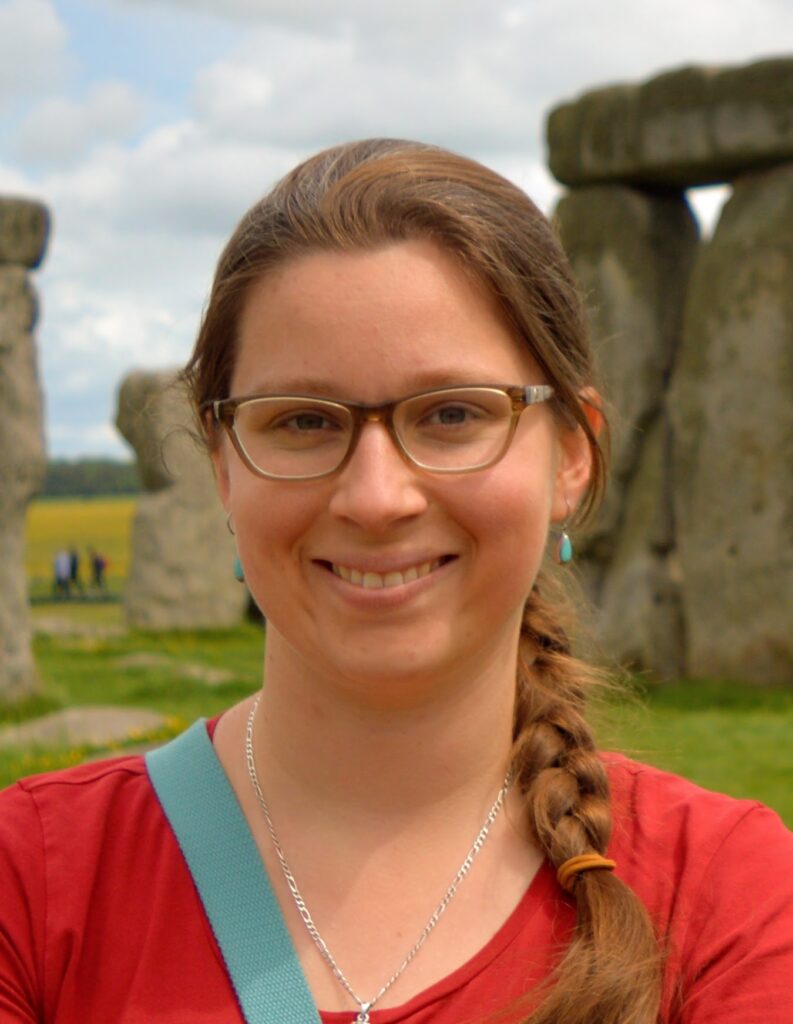
This week Steven and I met up for a virtual hallway chat with Dr. Sarah Hogarth Rossiter. Sarah shared with us what’s it like to be a contract instructor (on short notice) at Douglas College for Summer 2020. In addition, we chatted about some of her thoughts around the importance of critical thinking under COVID-19 times.

Check out her recent Burnabynow.com article, “We shouldn’t be second-guessing Dr. Henry during this crisis”

Listen to the Kelly Hunt song, “How Long” that Sarah mentioned for some food for thought while we’re apart. Check it out! https://youtu.be/ElwRHoDOjpE

Please share your thoughts, comments, and suggestions with us as the podcast continues to grow.

We would like to acknowledge that we live, learn, work, and play on the unceded traditional territories of the Coast Salish Peoples of the QayQayt and Kwikwetlem First Nations.
Digital Humanity: Professing in Novel Times—Episode One

with hosts Lisa Smith (Sociology) & Steven Bishop (Learning Design)

With the spread of COVID-19 across the globe, the Summer of 2020 is profoundly different for Douglas College faculty, staff, and students. Winter 2020 ended abruptly with a move to on-line teaching for the remainder of the term. For folks teaching summer courses at Douglas College, for the first time ever, all course instruction will be on-line. Dare we say that the phrases, ā€˜I’m scrambling…’, ā€˜I’m freaking out…’, and ā€˜when will this be over’, have certainly become common enough! We are just beginning to realize the vast and far-reaching impacts of this virus on individuals and communities across the globe. Many members of our community are grappling, both directly and indirectly, with the fallout of this massive social upheaval.

For instructors there is an imminent and ongoing need for technological support; however, the nuts and bolts of navigating on-line teaching are not the central focus of this podcast. This podcast is about hearing from DC faculty, staff, and students, as they navigate through the on-line realm in these novel times.

We had many questions at the outset of this podcast:
What was it like to move everything on-line within a week?
What things did you try, but found didn’t work?
How do you build a sense of connection and community when teaching in on-line spaces?
How do you cultivate presence as an instructor when teaching on-line?
How do you manage the complex patterns of inequality that continue to shape how students gain access to education?
Are we aware of all the ways our students are impacted by COVID-19 (emotional, physical, and beyond)?
What kinds of things do you consider when making choices about content delivery?
What is it like to instruct from home? To learn from home? To work from home?
What expertise can you share with us to help us understand the social changes that are unfolding?
What are your hopes, fears, worries for this time?

Even though the questions are complex, the format is simple. Guests are invited for virtual hallway chats. We record the conversation and share with others. We chose the hallway chat model to replicate one of the benefits of the close quarters we inhabit as HSS Faculty. We have the privilege of ā€˜running into’ each other throughout the term. We find these conversations rich opportunities for learning about the work of our colleagues, trouble-shooting small issues, or even delving into deeper reflection. For each chat session we will post any additional reading materials that are mentioned in the recording.

We invite you to listen, share, and create with us as we explore the depths of our new digital humanity.

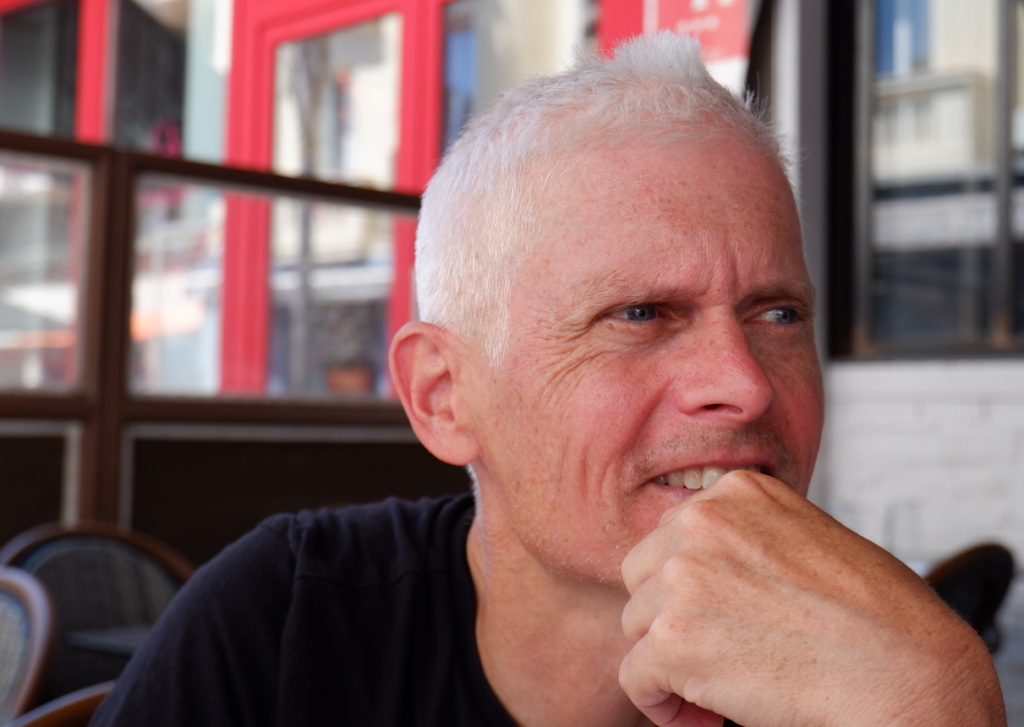
The first podcast is an interview with Joseph (Joey) Moore, Professor of Anthropology and Sociology at Douglas College. He has research interests in environmental sociology, urban sociology, and social movements.

Hallway Chat 1: Joseph Moore (Sociology)

Steven and I were pleased to welcome Dr. Joseph Moore, Sociology, for our first virtual hallway chat.

In this chat, Joey mentions Arlie Hothschild’s book, The Time Bind: When Work Becomes Home and Home Becomes Work, first published in 1997.

Check out his co-edited collection, Sociology of Home: Belonging, Community, and Place in the Canadian Context

https://www.canadianscholars.ca/books/sociology-of-home

Digital Humanity – Episode 1

Joey sent us this link to an University Affairs article with ideas on “humanizing an essentially dehumanizing medium.”

https://www.universityaffairs.ca/career-advice/career-advice-article/staying-human-in-the-zoom-boom/?utm_source=University+Affairs+e-newsletter&utm_campaign=6f11f919da-EMAIL_CAMPAIGN_2020_05_07&utm_medium=email&utm_term=0_314bc2ee29-6f11f919da-425258221

We would like to acknowledge that we live, learn, work, and play on the unceded traditional territories of the Coast Salish Peoples of the QayQayt and Kwikwetlem First Nations.