
From in-person to online course delivery within a short timeline

Technology interconnects us, as this snapshot of world-wide internet activity shows.
Image from The Opte Project
 (CC BY-NC 4.0)

“What would you do if you suddenly had to deliver your face-to-face class online, and with minimal preparation time?”
This was the question Michelle Jickling, Instructional Designer and E-Learning Developer for Douglas College’s Training Group, and Steven Bishop, Douglas College Learning Designer, discussed in the first of a series of episodes exploring digital literacies.

We used Blackboard Collaborate online meeting software to model the solutions we were proposing, since we were both at different locations. Here are the topics, images, and links discussed during the session:
Top Five Essentials for going from face-to-face course delivery to online delivery:

  1. Organize and collate the (existing) essential deliverables into a logical pattern (e.g., navigation information, weekly content folders, and assessment descriptions).
  2. Decide what kinds of communication are most practical (e.g., course messages, email, synchronous online meetings, and asynchronous discussion forums).
  3. Work backwards from the (existing) means of assessment to develop the assessment tools, Grade Center, and communication of grades and feedback to students.
  4. Set up the course for basic delivery (e.g., create content areas, folders, items; upload files).
  5. Deploy Blackboard tools as appropriate for all of the above.

Additional Considerations:

  • Student communications: synchronous meetings may be limited due to bandwidth, or access to reliable online services.
  • Means of assessment: other than proctored examination, Blackboard assessments would primarily be useful as open-book quizzes and formative assessments.
  • Instructional presence: an essential consideration not addressed in the list above.

SAMR = Substitution, Augmentation, Modification, and Redefinition

How Technology Can Improve Learner-Centred Teaching

Douglas College Blackboard Faculty Resources

DEN (Douglas Educators Network) Blackboard Organization

Blackboard Collaborate online meeting software—Help for Moderators

We would like to acknowledge that we live, learn, work, and play on the unceded traditional territories of the Coast Salish Peoples of the QayQayt and Kwikwetlem First Nations.
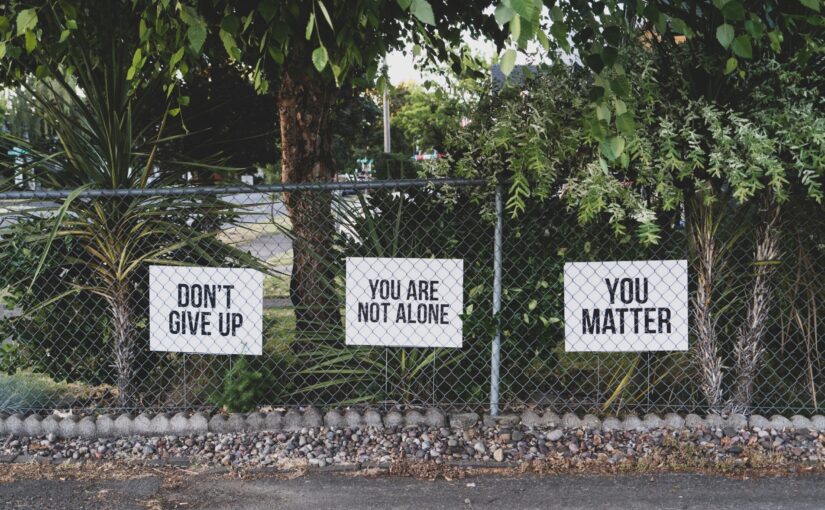

You Can Bounce Back!

Today’s students are experiencing stress, anxiety, and depression at record levels, caused by everything from moving away from home (or country), to social expectations, to work pressures, to academic pressures. Without intervention, the weight of all this can be overwhelming leading to various mental health conditions that can negatively impact their academic performance.

On January 20, Rebecca Gagan, Founder and Director of the University of Victoria’s Bounce program, came to Douglas College to facilitate an interactive workshop to discuss her work and Douglas College’s opportunity to intervene at an early stage to help prevent crisis-level mental health issues. By changing the way we understand and talk to students about their struggles, we can create a community of support, helping students before they become overwhelmed by building positive coping skills that will change the course of their academic journey.

Rebecca Gagan, Founder and Director, UVic Bounce

The genesis of UVic Bounce

Rebecca’s work in this area started in 2015 after she received a scholarship in teaching and learning from UVic’s Learning and Teaching Support and Innovation (LTSI). She studied her first-year writing classes to understand how students could become more resilient through short in-class writing interventions. Her study in turn led to the creation of a website for the Faculty of Humanities for a video initiative called “UVic Bounce.”

Using videos in which alumni and faculty speak openly about their successes and failures during their university experiences, students will see that their own struggles and failures are an important part of their learning experience. By normalizing and de-stigmatizing the challenges that students face, UVic Bounce will make it easier for students to share their struggles and to seek the support that they need.

Cited from https://www.uvic.ca/humanities/student-resources/bounce/index.php

Some workshop A-ha! moments

Rebecca started the ball rolling by playing one of the videos in the Bounce project. A hush fell over the room as we watched and listened to the story playing out on screen. At times it was hard to watch, but by the end, my heart was full of optimism. Listening to the stories of senior professors and administrators talk about their own struggles while studying underlined that all of us (even truly successful people) can fail. On the flip side, those same people can rebound to success, when given the proper support and encouragement, which is exactly what happened with the video participants. You can bounce back.

Some rich discussion followed including having participants reflect on a time when they felt particularly troubled, alone, or anxious while at school. In other words, what did that feel like and how did they overcome that challenge.

Rebecca provided some concrete examples of ways staff, instructors, and administrators could be there for students by simply telling their own stories, thus becoming vulnerable, bridging the distance between them and their students.

But, enough from me. Here is the full workshop recording. Sit back, grab a cup of tea, and prepare to be amazed at our collective resiliency.

kWidget.embed({ “targetId”: “kaltura_player_1666293067”, “wid”: “_142”, “uiconf_id”: 23450040, “flashvars”: {}, “cache_st”: 1666293067, “entry_id”: “0_z3wgamlc” });

Our sincere thanks goes to the Douglas College-Wide Faculty Professional Development Committee and Academic Technology Services for funding this workshop.

We would like to acknowledge that we live, learn, work, and play on the unceded traditional territories of the Coast Salish Peoples of the QayQayt and Kwikwetlem First Nations.