Naïve Art for Educational Media

Media Easy Wins – Part one

In painting, “fine art” involves formal training, skillful technique, and the use of perspective, refined colour palette and subtle representations. Naive art might lack many or all of these qualities, and has been judged as “technologically primitive” by Western academia. It is also recognized as authentic, simple and honest. And it can be impactful. Consider the work of Henri Rousseau, a particularly influential naive artist.
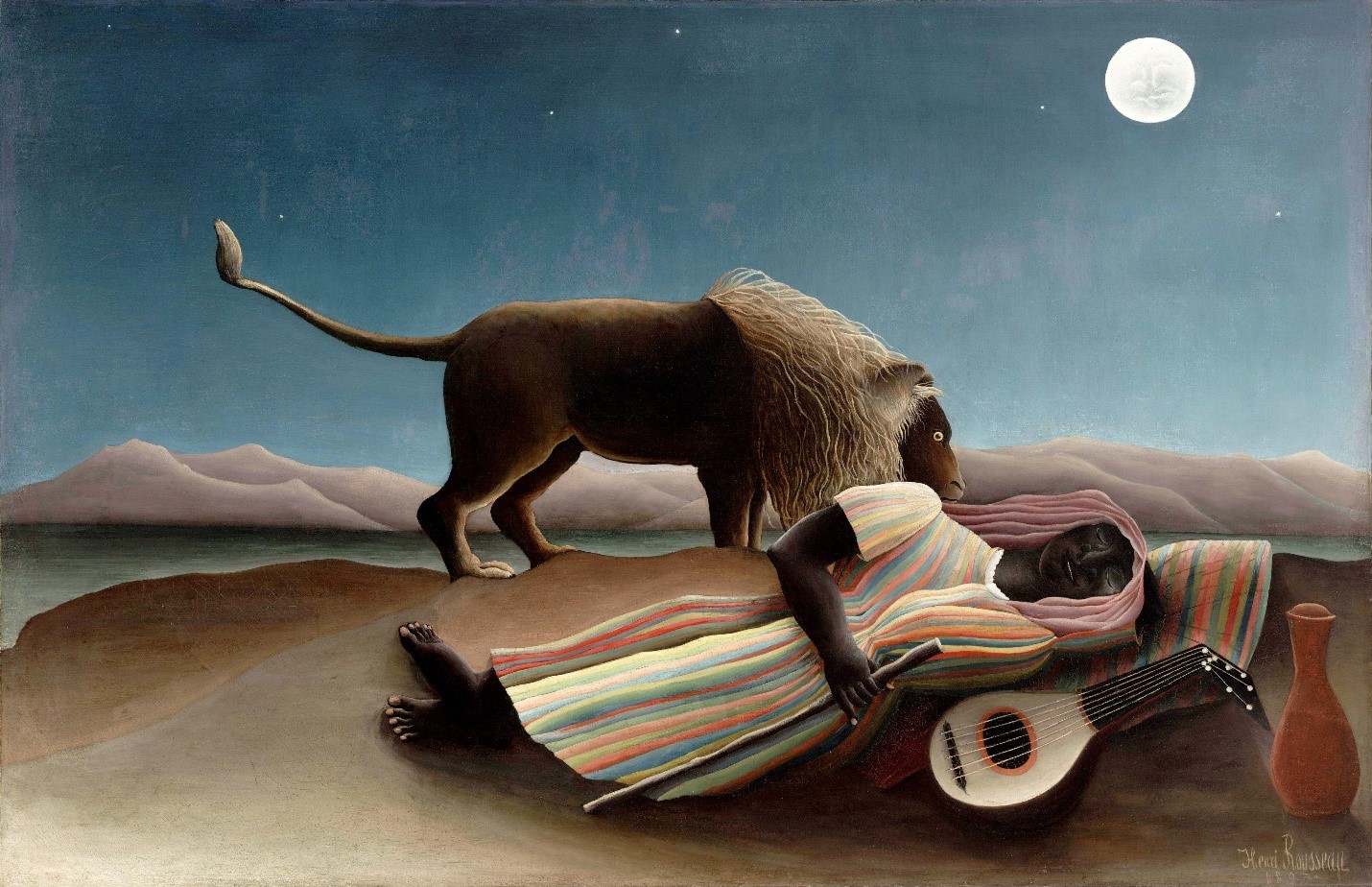
Gypsy-dream

By Henri Rousseau – La zingara addormentata, Public Domain, Created: Dec 31 1896

What does painting have to do with educational media?

The analogy draws attention to the value of video and audio educational media created by amateurs. Many instructors I have met do not have formal training, or the resources to get formal training in creating video and audio learning objects. Help from professional media experts may be difficult to obtain. Subject matter experts are often challenged to create multiple ways to represent their knowledge to students.

In the recording industry, a fair amount of recorded creative work is not used in the final product. In education, unused video or audio recorded content may represent poor planning at best and wasted time and resources in the worst case. Time and budget-constrained educators have to be creative, competent and efficient to make the best use of opportunities to communicate their knowledge to others via video or audio recordings.

Instructors are also in a position to use multiple means of representation (the first principle of Universal Design for Learning) to convey meaning to students, and to allow the same for student assignment submission. Adopting an on-the-ground, essential approach to media production can be an effective way to encourage alternate modes of expression.

The next post in this series offers a few ideas from our recent experience to support the creation of simple, artful, and impactful recordings for educational purposes.

The Lightboard is coming! The Lightboard is coming!

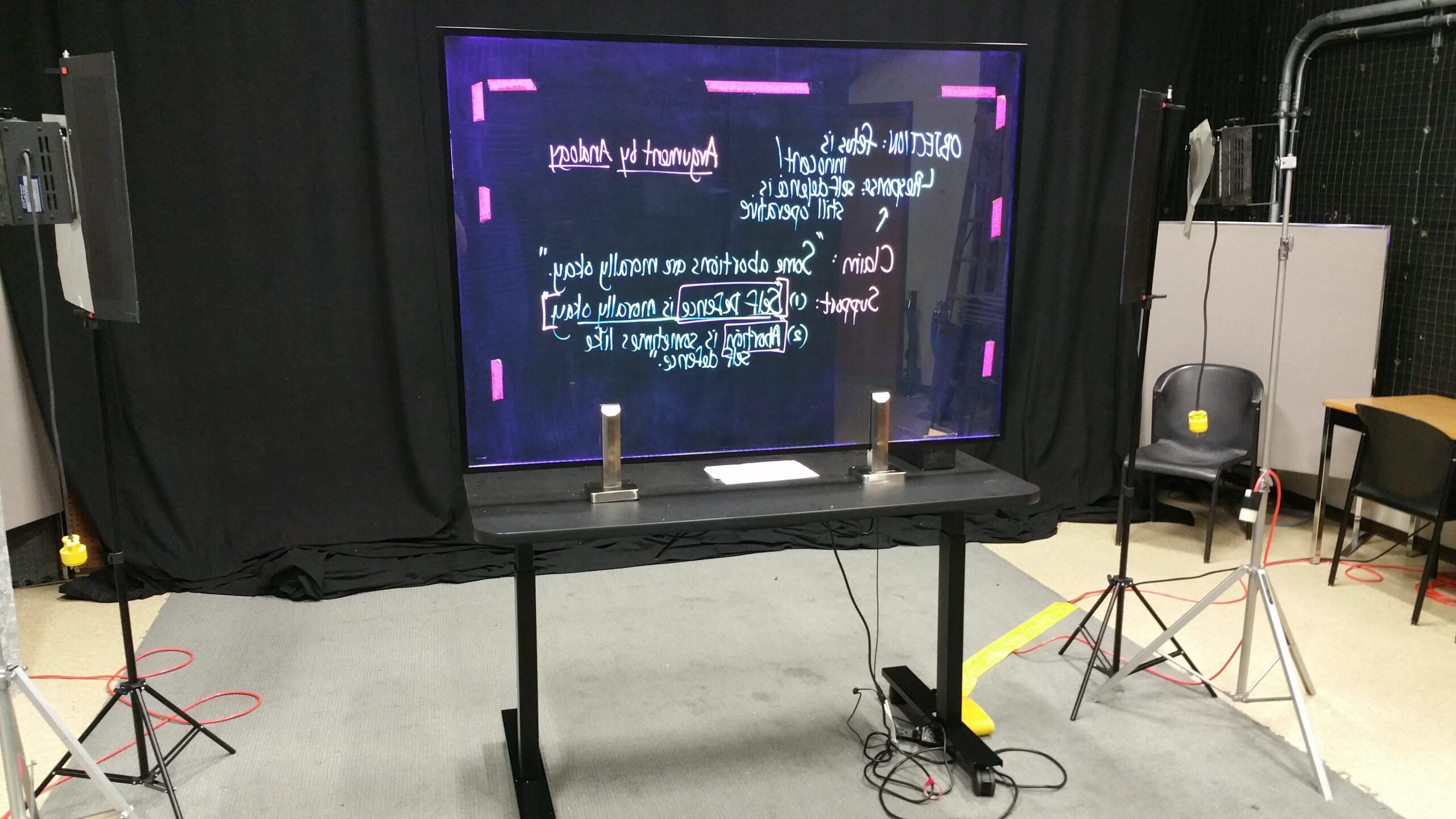
Truth be told, it’s already here. Yes, Douglas College is now the proud owner and purveyor of a Lightboard. After first reading about this technology on Twitter back in 2015, we finally have our own board, thanks to the DC Innovative Technology Projects Fund.

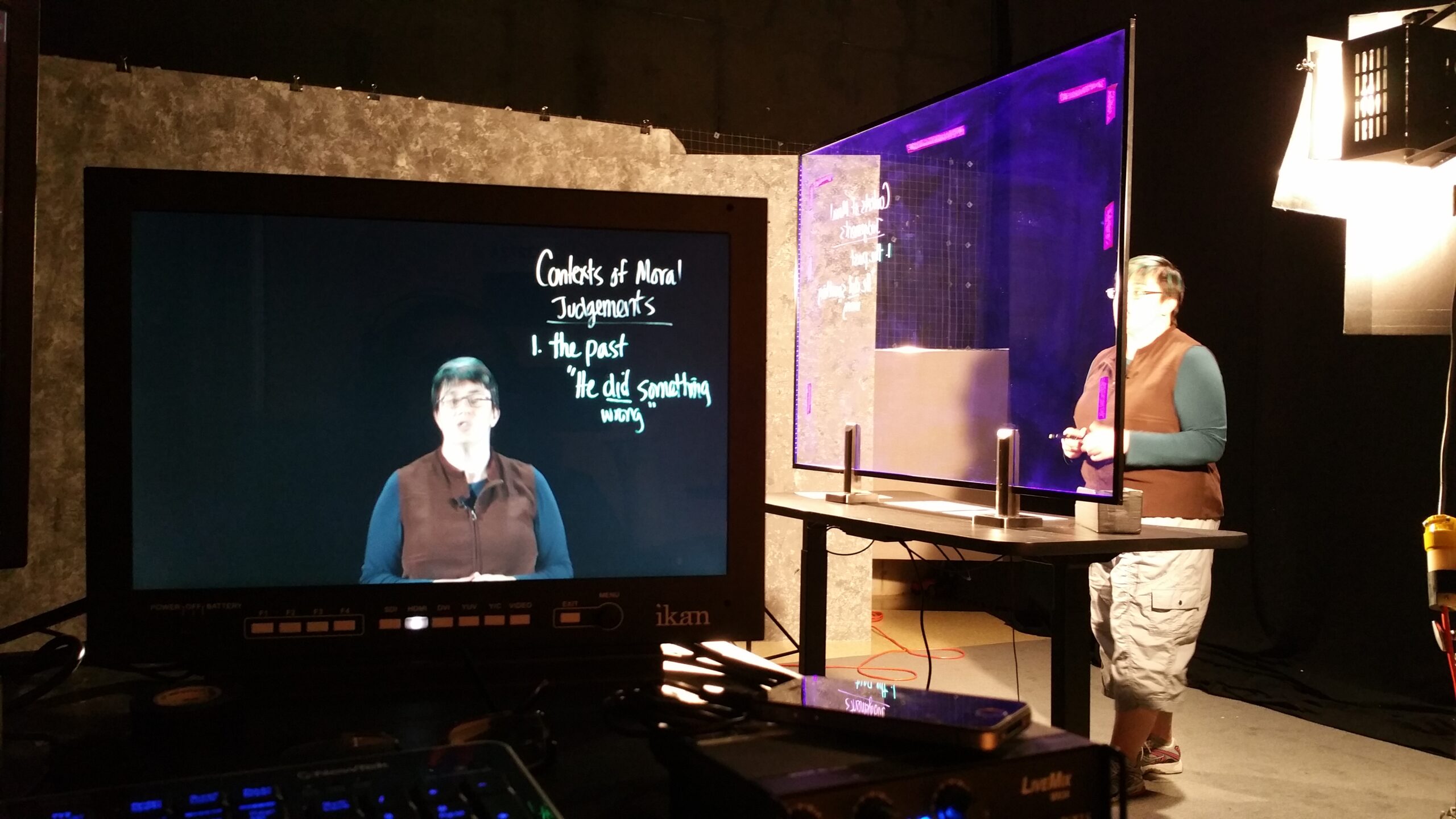
And what is the Lightboard? Actually, it’s very much like a whiteboard, replacing the hard whiteboard surface with glass. The glass is mounted on a desk that can move up and down, depending on the height of the person using it. It’s also surrounded by lights, which, when used with special fluorescent markers makes for a very pleasing presentation.

Lightboard-deskKira-Lightboard-desk

But the true beauty of the Lightboard lies in the fact that the instructor can write her lesson concepts on the board facing the video camera, then through the magic of mirrors, the image is transposed, displaying properly for the viewer of the recordings. By recording your lecture via the Lightboard, you then have the ability to post the recording in your Blackboard course, reusing it repeatedly until the material needs updating.

The ATS team is excited about this new technology and looks forward to helping instructors integrate it into their teaching practice.


Our ETUG road trip

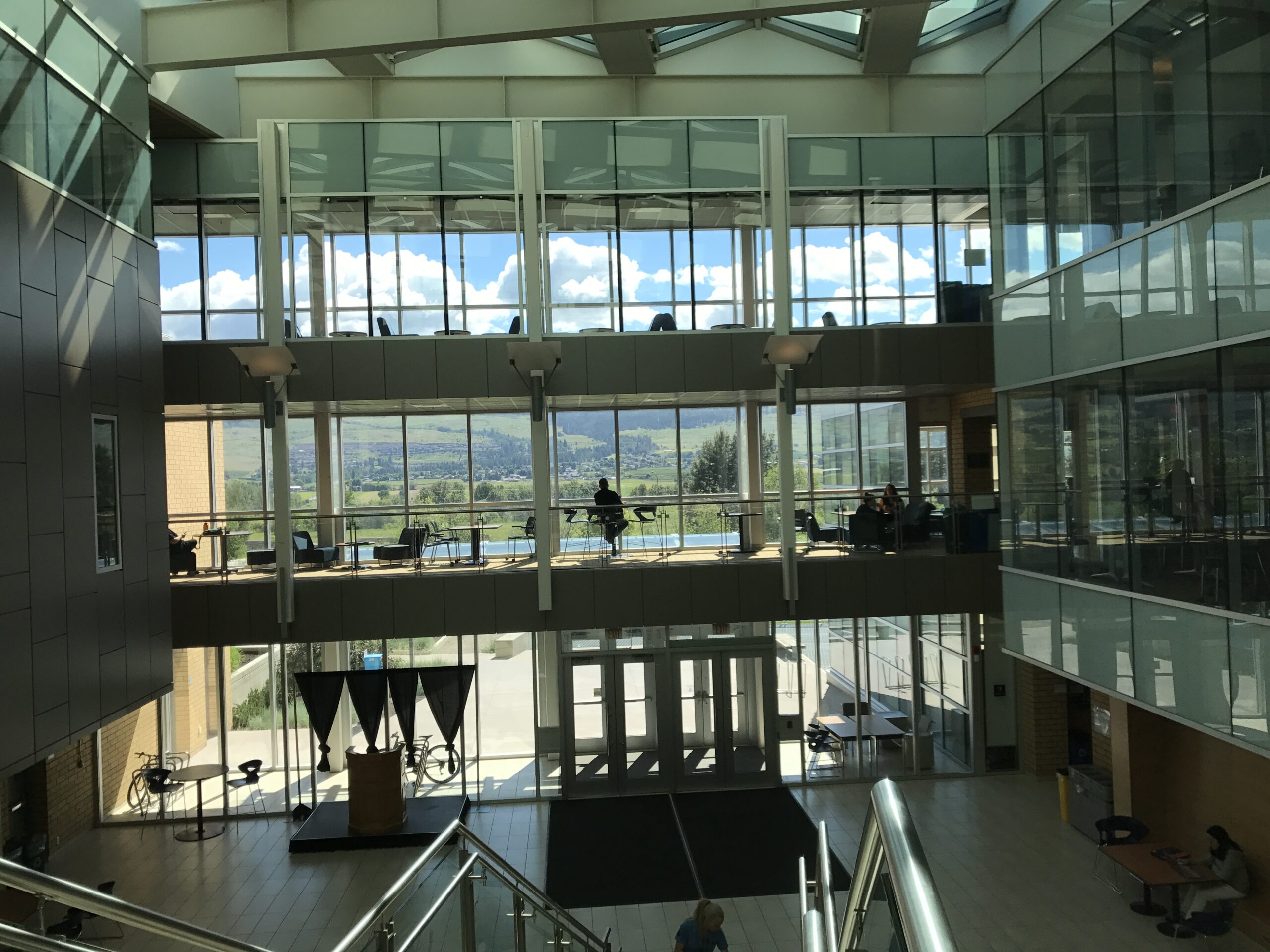
Last week, Tim Paul, Mikki Herbold, and I attended the ETUG Spring workshop “Education by Design” (May 31-June 2) at UBC-Okanagan in beautiful Kelowna, BC. Excited for our road trip, we left the Lower Mainland in good time then hit the highway, jammin’ the whole way to some groovy tunes provided by yours truly (after all, it was my car…). We made it to Kelowna in 4 hours or so, then decided to stop for lunch at Memphis Blues. After some relax time on the patio, we got back in the car for the final leg of our journey to UBC-Okanagan. Seriously! What a gorgeous campus!

IMG_0337

We stayed in residence, opting for the true “student experience.” A studio room with bed, desk, kitchenette, and bathroom provided all the creature comforts we were looking for.

After freshening up, I met my fellow SCETUGgers (stewardship committee members) for a brief pre-conference meeting to confirm we all knew our respective duties/tasks during the conference. As for Mikki and Tim, they explored the campus, uncovering the local Starbucks. Good sleuthing, team!

Next, we hopped in a taxi to Freddy’s Brew Pub to meet up with the ETUG participants. It was wonderful to reconnect with old friends and meet new ones, socializing for an hour or two before heading back to campus for some much-needed rest before the start of the conference the next day.

Yikes! 7:30 am comes early–that’s all I’m saying. Thanks to the UBC-O team (with Janine Hirtz at the helm), we got the Reg Desk set up in short order, just outside where breakfast was being served. After some scrambled eggs, toast, and copious cups of coffee, I felt ready for whatever the day might bring.

Starting things off was Dr. Peter Newbury, the new Director of the Centre for Teaching and Learning at UBC-O. His keynote presentation titled “How (you can help) people learn?” was the perfect introduction to this action-packed conference.

With four main streams offered (Learning Design, Ed Tech, Faculty/Ed Development, & Breakthrough Thinking), we decided the best approach was to divide and conquer; each of us attending different sessions. What a selection! Everything from
A New Format for Course Redesign Process to Intro to Wikipedia Edit-a-thon to Design Challenge: Mobile Learning to the FOIPPA Design Challenge–the choices were extensive!

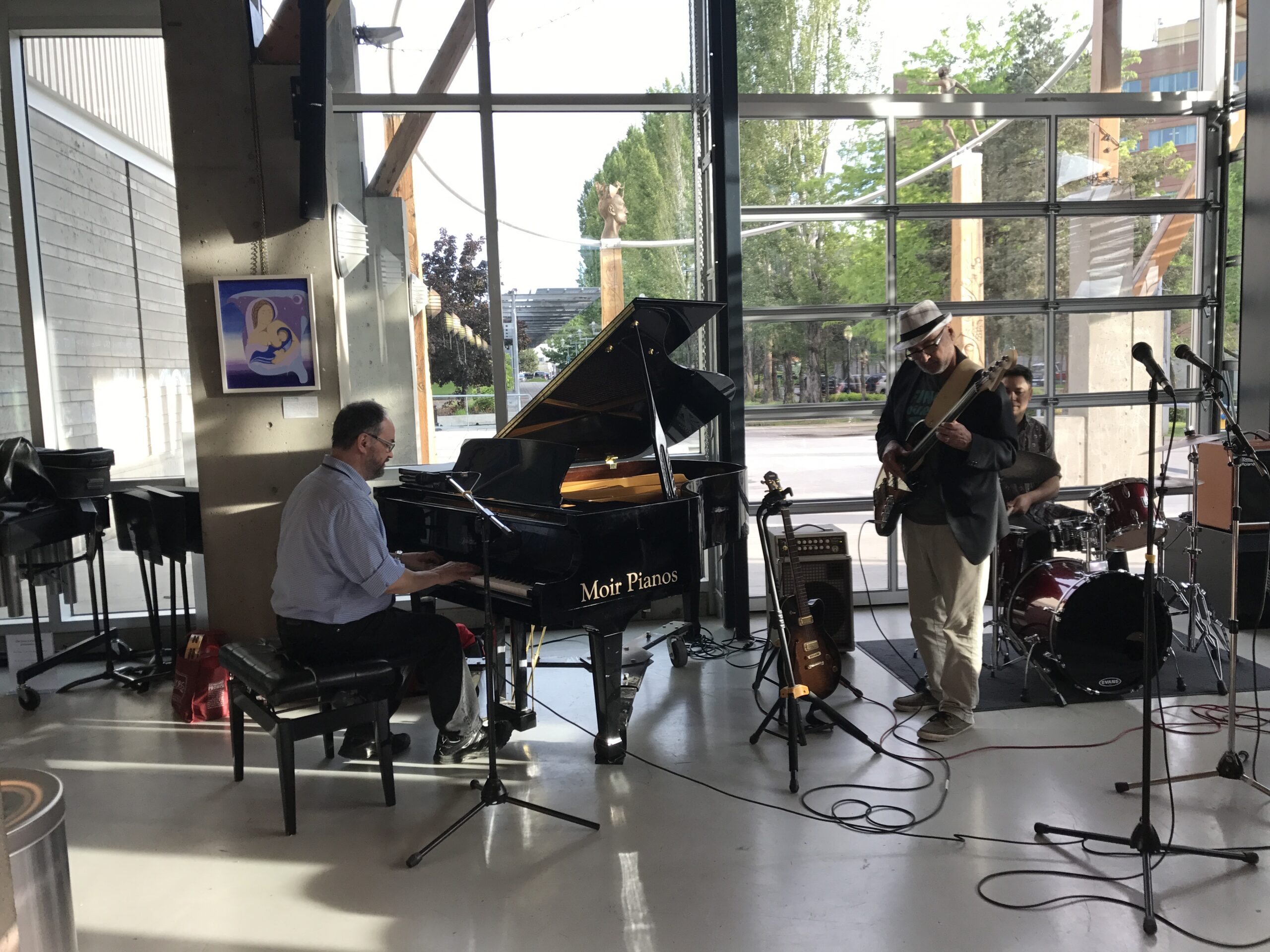
The big social on June 1 was held at Kelowna’s Rotary Club downtown, a super-cool venue perfect for a cocktail party with the smooth stylings of Breaking Band and DJ Draggin (aka Jason Toal, chair of ETUG). And dancing? Yeah, we did a little of that too…

IMG_0328

Friday morning came quickly with another slate of great sessions and presentations such as Open Pedagogy; I Stream, You Stream, We All Stream: DIY Live Streaming; and Okanagan College’s Disrupters Group among others.

And, before we knew it, we had to hit the road to get back to our regular lives. But, for a few days we had the opportunity to share, collaborate, and network about issues, challenges, and innovations at our institutions realizing that we all have similar experiences. Thank you, ETUG. Fun was had and stuff was learned by all.